
Close Menu
  • Homepage
  • News
  • Cloud & AI
  • ECommerce
  • Entertainment
  • Finance
  • Opinion
  • Podcast
  • Contact

Subscribe to Updates

Get the latest technology news from TechFinancials News about FinTech, Tech, Business, Telecoms and Connected Life.

What's Hot

Standard Chartered GBA Business Confidence Indices reveal steady business sentiment

2026-01-31

AFF draws 4,000+ global political and business leaders, inaugural Global Business Summit

2026-01-31

NSFW AI Chat with Advanced Memory Systems for Contextual Interaction Launches on Dream Companion

2026-01-31
Facebook X (Twitter) Instagram
Trending
  • Standard Chartered GBA Business Confidence Indices reveal steady business sentiment
Facebook X (Twitter) Instagram YouTube LinkedIn WhatsApp RSS
TechFinancials
  • Homepage
  • News
  • Cloud & AI
  • ECommerce
  • Entertainment
  • Finance
  • Opinion
  • Podcast
  • Contact
TechFinancials
Home»Opinion»AI Is Exciting – And An Ethical Minefield: 4 Essential Reads On The Risks And Concerns About This Technology
Opinion

AI Is Exciting – And An Ethical Minefield: 4 Essential Reads On The Risks And Concerns About This Technology

The ConversationBy The Conversation2023-05-02No Comments5 Mins Read
Share Facebook Twitter Pinterest LinkedIn Tumblr Email
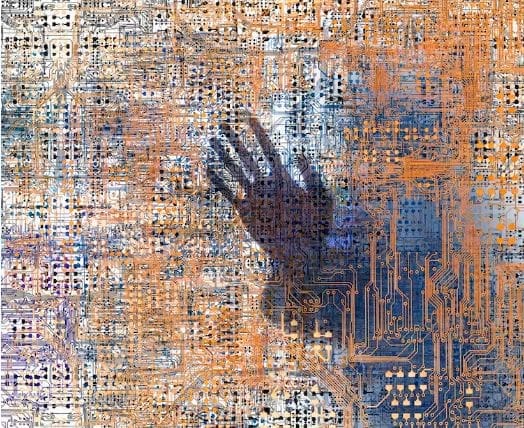
AI Minefield
Who’s in control? John Lund/Stone via Getty Images
Share
Facebook Twitter LinkedIn Pinterest Email Copy Link

By Molly Jackson, The Conversation

If you’re like me, you’ve spent a lot of time over the past few months trying to figure out what this AI thing is all about. Large-language models, generative AI, algorithmic bias – it’s a lot for the less tech-savvy of us to sort out, trying to make sense of the myriad headlines about artificial intelligence swirling about.

But understanding how AI works is just part of the dilemma. As a society, we’re also confronting concerns about its social, psychological and ethical effects. Here we spotlight articles about the deeper questions the AI revolution raises about bias and inequality, the learning process, its impact on jobs, and even the artistic process.

1. Ethical debt

When a company rushes software to market, it often accrues “technical debt”: the cost of having to fix bugs after a program is released, instead of ironing them out beforehand.

There are examples of this in AI as companies race ahead to compete with each other. More alarming, though, is “ethical debt,” when development teams haven’t considered possible social or ethical harms – how AI could replace human jobs, for example, or when algorithms end up reinforcing biases.

Casey Fiesler, a technology ethics expert at the University of Colorado Boulder, wrote that she’s “a technology optimist who thinks and prepares like a pessimist”: someone who puts in time speculating about what might go wrong.

That kind of speculation is an especially useful skill for technologists trying to envision consequences that might not impact them, Fiesler explained, but that could hurt “marginalized groups that are underrepresented” in tech fields. When it comes to ethical debt, she noted, “the people who incur it are rarely the people who pay for it in the end.”

2. Is anybody there?

AI programs’ abilities can give the impression that they are sentient, but they’re not, explained Nir Eisikovits, director of the Applied Ethics Center at the University of Massachusetts Boston. “ChatGPT and similar technologies are sophisticated sentence completion applications – nothing more, nothing less,” he wrote.

But saying AI isn’t conscious doesn’t mean it’s harmless.

“To me,” Eisikovits explained, “the pressing question is not whether machines are sentient but why it is so easy for us to imagine that they are.” Humans easily project human features onto just about anything, including technology. That tendency to anthropomorphize “points to real risks of psychological entanglement with technology,” according to Eisikovits, who studies AI’s impact on how people understand themselves.

A human hand against a dark background reaches out to touch a hologram-like hand.
People give names to boats and cars – and can get attached to AI, too.
Yuichiro Chino/Moment via Getty Images

Considering how many people talk to their pets and cars, it shouldn’t be a surprise that chatbots can come to mean so much to people who engage with them. The next steps, though, are “strong guardrails” to prevent programs from taking advantage of that emotional connection.

3. Putting pen to paper

From the start, ChatGPT fueled parents’ and teachers’ fears about cheating. How could educators – or college admissions officers, for that matter – figure out if an essay was written by a human or a chatbot?

But AI sparks more fundamental questions about writing, according to Naomi Baron, an American University linguist who studies technology’s effects on language. AI’s potential threat to writing isn’t just about honesty, but about the ability to think itself.

A woman with short hair, a necklace, and a short-sleeve dress smiles guardedly in a black and white photograph.
American writer Flannery O’Connor sits with a copy of her novel ‘Wise Blood,’ published in 1952.
Apic/Hulton Archive via Getty Images

Baron pointed to novelist Flannery O’Connor’s remark that “I write because I don’t know what I think until I read what I say.” In other words, writing isn’t just a way to put your thoughts on paper; it’s a process to help sort out your thoughts in the first place.

AI text generation can be a handy tool, Baron wrote, but “there’s a slippery slope between collaboration and encroachment.” As we wade into a world of more and more AI, it’s key to remember that “crafting written work should be a journey, not just a destination.”

4. The value of art

Generative AI programs don’t just produce text, but also complex images – which have even captured a prize or two. In theory, allowing AI to do nitty-gritty execution might free up human artists’ big-picture creativity.

Not so fast, said Eisikovits and Alec Stubbs, who is also a philosopher at the University of Massachusetts Boston. The finished object viewers appreciate is just part of the process we call “art.” For creator and appreciator alike, what makes art valuable is “the work of making something real and working through its details”: the struggle to turn ideas into something we can see.

Editor’s note: This story is a roundup of articles from The Conversation’s archives.The Conversation

Molly Jackson, Religion and Ethics Editor, The Conversation

This article is republished from The Conversation under a Creative Commons license. Read the original article.

AI ai ethics Broadcast Engineering and Multimedia Design Ethics Ethics and Technology Sentience
Share. Facebook Twitter Pinterest LinkedIn Tumblr Email
The Conversation
  • Website

Related Posts

South Africa Could Unlock SME Growth By Exploiting AI’s Potential Through Corporate ESD Funds

2026-01-28

How Local Leaders Can Shift Their Trajectory In 2026

2026-01-23

Why Legal Businesses Must Lead Digital Transformation Rather Than Chase It

2026-01-23

Directing The Dual Workforce In The Age of AI Agents

2026-01-22

The Productivity Myth That’s Costing South Africa Talent

2026-01-21

The Boardroom Challenge: Governing AI, Data And Digital

2026-01-20

Ransomware: What It Is And Why It’s Your Problem

2026-01-19

AI Can Make The Dead Talk – Why This Doesn’t Comfort Us

2026-01-19

Can Taxpayers Lose By Challenging SARS?

2026-01-16
Leave A Reply Cancel Reply

DON'T MISS
Breaking News

Meet The €2.95M Capricorn 01 Zagato Hypercar Rebel

capricorn GROUP (capricorn), the German-based industry leader in automotive and motorsport lightweight technology, presented two…

SARB Holds Repo Rate Steady in Cautious Monetary Policy Decision

2026-01-29

Huawei Says The Next Wave Of Infrastructure Investment Must Include People, Not Only Platforms

2026-01-21

South Africa: Best Starting Point In Years, With 3 Clear Priorities Ahead

2026-01-12
Stay In Touch
  • Facebook
  • Twitter
  • YouTube
  • LinkedIn
OUR PICKS

How a Major Hotel Group Is Electrifying South Africa’s Travel

2026-01-29

Volvo C70: 30 Years Of The Car That Changed The Way Volvo Looked

2026-01-29

The EX60 Cross Country: Built For The “Go Anywhere” Attitude

2026-01-23

Mettus Launches Splendi App To Help Young South Africans Manage Their Credit Health

2026-01-22

Subscribe to Updates

Get the latest tech news from TechFinancials about telecoms, fintech and connected life.

About Us

TechFinancials delivers in-depth analysis of tech, digital revolution, fintech, e-commerce, digital banking and breaking tech news.

Facebook X (Twitter) Instagram YouTube LinkedIn WhatsApp Reddit RSS
Our Picks

Standard Chartered GBA Business Confidence Indices reveal steady business sentiment

2026-01-31

AFF draws 4,000+ global political and business leaders, inaugural Global Business Summit

2026-01-31

NSFW AI Chat with Advanced Memory Systems for Contextual Interaction Launches on Dream Companion

2026-01-31
Recent Posts
  • Standard Chartered GBA Business Confidence Indices reveal steady business sentiment
  • AFF draws 4,000+ global political and business leaders, inaugural Global Business Summit
  • NSFW AI Chat with Advanced Memory Systems for Contextual Interaction Launches on Dream Companion
  • NIX buys ORACLE Foundation, Makes CaryPact Core Standard For Global Decentralized Computing
  • Meet The €2.95M Capricorn 01 Zagato Hypercar Rebel
TechFinancials
RSS Facebook X (Twitter) LinkedIn YouTube WhatsApp
  • Homepage
  • Newsletter
  • Contact
  • Advertise
  • Privacy Policy
  • About
© 2026 TechFinancials. Designed by TFS Media. TechFinancials brings you trusted, around-the-clock news on African tech, crypto, and finance. Our goal is to keep you informed in this fast-moving digital world. Now, the serious part (please read this): Trading is Risky: Buying and selling things like cryptocurrencies and CFDs is very risky. Because of leverage, you can lose your money much faster than you might expect. We Are Not Advisors: We are a news website. We do not provide investment, legal, or financial advice. Our content is for information and education only. Do Your Own Research: Never rely on a single source. Always conduct your own research before making any financial decision. A link to another company is not our stamp of approval. You Are Responsible: Your investments are your own. You could lose some or all of your money. Past performance does not predict future results. In short: We report the news. You make the decisions, and you take the risks. Please be careful.

Type above and press Enter to search. Press Esc to cancel.

Ad Blocker Enabled!
Ad Blocker Enabled!
Our website is made possible by displaying online advertisements to our visitors. Please support us by disabling your Ad Blocker.