
Close Menu
  • Homepage
  • News
  • Cloud & AI
  • ECommerce
  • Entertainment
  • Finance
  • Opinion
  • Podcast
  • Contact

Subscribe to Updates

Get the latest technology news from TechFinancials News about FinTech, Tech, Business, Telecoms and Connected Life.

What's Hot

Digitap ($TAP) Crushes NexChain with Real Banking Utility: Best Crypto to Buy in 2026

2026-02-05

Bridging Financial Frontiers: ZOOMEX Launches “February XAUT Airdrop Event”

2026-02-05

More Profitable Than SHIB or SOL? Digitap’s Big-Time Deposit Upgrade Gains Worldwide Attention

2026-02-05
Facebook X (Twitter) Instagram
Trending
  • Digitap ($TAP) Crushes NexChain with Real Banking Utility: Best Crypto to Buy in 2026
Facebook X (Twitter) Instagram YouTube LinkedIn WhatsApp RSS
TechFinancials
  • Homepage
  • News
  • Cloud & AI
  • ECommerce
  • Entertainment
  • Finance
  • Opinion
  • Podcast
  • Contact
TechFinancials
Home»Connected Life»Tap-To-Pay, Insert-To-Rob: Cybercriminals Can Now Block Contactless Payments
Connected Life

Tap-To-Pay, Insert-To-Rob: Cybercriminals Can Now Block Contactless Payments

Staff WriterBy Staff Writer2023-02-01Updated:2023-02-02No Comments4 Mins Read
Share Facebook Twitter Pinterest LinkedIn Tumblr Email
Prilex
Prilex_Infographic_What can be a contactless device
Share
Facebook Twitter LinkedIn Pinterest Email Copy Link

Kaspersky uncovered three new variants of Prilex malware, made by a group of cybercriminals, that was named after the most advanced Point-of-Sales (PoS) malware back in 2022. The discovered Prilex modifications can now block contactless near-field communication (NFC) transactions on infected PoS-terminals, forcing customers to use their physical credit cards, enabling cybercriminals to steal money. While currently it is most active in Latin America, the expansion of Prilex into the Middle East, Turkiye and Africa region is possible in the coming months. 

Prilex is a notorious threat actor that gradually evolved from Automated Teller Machines (ATMs)-focused malware into a ​unique modular PoS malware — the most advanced PoS threat discovered so far. As described by Kaspersky previously in 2022, Prilex threat actor conducts so-called “GHOST” attacks, allowing them to perform credit card fraud — even on cards protected with the purported unhackable CHIP and PIN technology. Now, Prilex has gone even further.

Security experts wondered whether Prilex was able to capture data coming from NFC enabled credit cards. Recently, during an incident response for a customer affected by Prilex, Kaspersky researchers uncovered three new modifications with the power to block contactless payment transactions, that become extremely popular during and after pandemics.

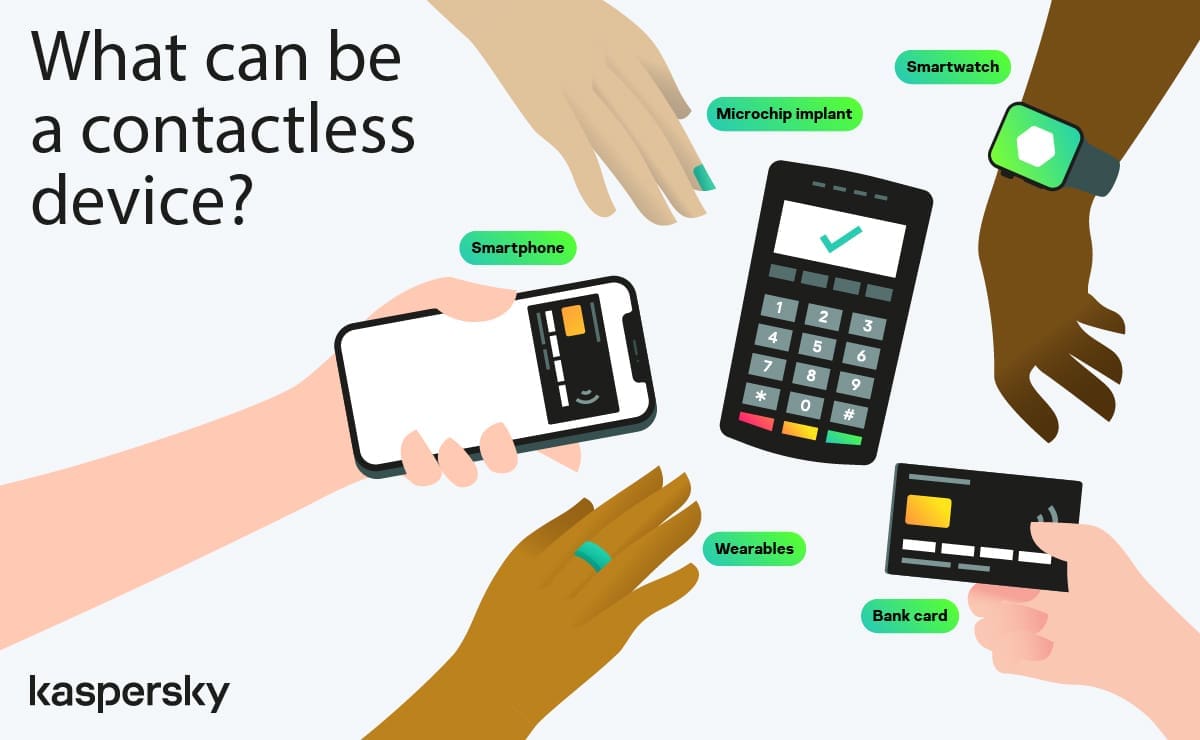
Contactless payment systems such as credit and debit cards, key fobs, and other smart devices, including mobile devices have traditionally featured radio-frequency identification (RFID). More recently, Samsung Pay, Apple Pay, Google Pay, Fitbit Pay and mobile bank applications have implemented near-field communication (NFC) technologies to support secure contactless transactions.

Contactless credit cards offer a convenient and secure way to make payments without the need to physically touch, insert or swipe the card. However, Prilex has learned to block such transactions by implementing a rule-based file that specifies whether or not to capture credit card information, and an option to block NFC-based transactions.

Prilex
Excerpt from Prilex rules file referencing to NFC blocking.

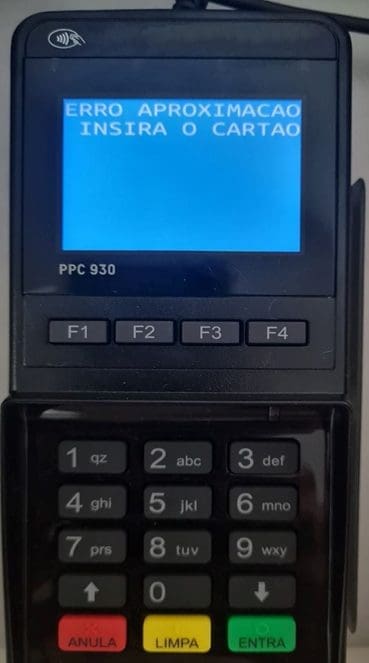
Because NFC-based transactions generate a unique card number valid for only one transaction, if Prilex detects an NFC-based transaction and blocks it, the PIN pad will show the following message:
Prilex fake error
Prilex fake error displayed in the PIN pad reader that says “Contactless error, insert your card”.

The cybercriminal’s goal is to force the victim to use his/her physical card by inserting it into the PIN pad reader, so the malware can capture data coming from the transaction, using every way available for Prilex, such as manipulating cryptograms to perform GHOST attacks.

Another new feature added to the latest Prilex samples is the possibility to filter credit cards according to their segment, and create different rules for different segments. For example, they can block NFC and capture card data, only if the card is Black/Infinite, Corporate or other with high transaction limit, which is much more attractive than standard credit cards, with low balance/limit.

Prilex has been operating in LatAm region since 2014 and is allegedly behind one of the largest attacks in the region. During the Rio carnival in 2016, the actor cloned more than 28,000 credit cards and drained more than 1,000 ATMs in Brazilian banks. Now, it has expanded its attacks globally. It was spotted in Germany in 2019 when a criminal gang cloned Mastercard debit cards issued by German bank OLB and withdrew more than €1.5 million from around 2,000 customers. As for the recently discovered modifications, they have been detected in Brazil – however, they may spread to other countries and regions as well.

Expansion of Prilex into other regions, including the Middle East, Turkiye and Africa, is possible in the coming months.

“Contactless payments are now a part of our everyday life and the statistics shows the retail segment dominated the market with more than 59 percent share of the global contactless revenue in 2021. Such transactions are extremely convenient and particularly safe, so it’s logical for cybercriminals to create malware that blocks NFC-related systems. As the transaction data generated during contactless payment is useless from a cybercriminal’s perspective, it’s understandable that Prilex needs to prevent contactless payment to force victims to insert the card into the infected PoS terminal,” comments Fabio Assolini, head of the Latin American Global Research and Analysis Team (GReAT) at Kaspersky.

contactless payments Cybercriminals Insert-To-Rob Prilex fake error tap-to-pay
Share. Facebook Twitter Pinterest LinkedIn Tumblr Email
Staff Writer

Related Posts

The EX60: A Volvo That Talks Back

2026-01-20

New SITA CEO Vows: Faster Digital State, Stronger Security For All

2026-01-15

Stablecoins Are Gaining Ground As Digital Currency In Africa: How To Avoid Risks

2026-01-13

New Volvo EX60 Promises Up to 810km Range With A Quick Recharge

2026-01-08

SIU, Hawks In Coordinated Raids On Alleged R161M Covid-19 TERS Fraud Syndicate

2025-12-11

VERAFIED And Nolo Phiri Lead A New Digital Truth Movement In The Age Of AI Misinformation

2025-12-03

Can AI Be Inclusive Without Africa?

2025-12-01

Crypto Payments Startup Oobit Accelerates Global Expansion Strategy with Launch in South Africa

2025-11-28

Over R270M In Phuthuma Nathi Dividends Remain Unclaimed

2025-11-27
Leave A Reply Cancel Reply

DON'T MISS
Breaking News

Dutch Entrepreneurial Development Bank FMO Invests R340M In Lula To Expand SME funding In SA

South African SME funding platform Lula has secured R340 million in local currency funding from…

Paarl Mall Gets R270M Mega Upgrade

2026-02-02

Huawei Says The Next Wave Of Infrastructure Investment Must Include People, Not Only Platforms

2026-01-21

South Africa: Best Starting Point In Years, With 3 Clear Priorities Ahead

2026-01-12
Stay In Touch
  • Facebook
  • Twitter
  • YouTube
  • LinkedIn
OUR PICKS

Vodacom Reports Robust Q3 Growth, Driven By Diversification And Strategic Moves

2026-02-04

South Africa’s First Institutional Rand Stablecoin, ZARU, Launches

2026-02-03

The EX60 Cross Country: Built For The “Go Anywhere” Attitude

2026-01-23

Mettus Launches Splendi App To Help Young South Africans Manage Their Credit Health

2026-01-22

Subscribe to Updates

Get the latest tech news from TechFinancials about telecoms, fintech and connected life.

About Us

TechFinancials delivers in-depth analysis of tech, digital revolution, fintech, e-commerce, digital banking and breaking tech news.

Facebook X (Twitter) Instagram YouTube LinkedIn WhatsApp Reddit RSS
Our Picks

Digitap ($TAP) Crushes NexChain with Real Banking Utility: Best Crypto to Buy in 2026

2026-02-05

Bridging Financial Frontiers: ZOOMEX Launches “February XAUT Airdrop Event”

2026-02-05

More Profitable Than SHIB or SOL? Digitap’s Big-Time Deposit Upgrade Gains Worldwide Attention

2026-02-05
Recent Posts
  • Digitap ($TAP) Crushes NexChain with Real Banking Utility: Best Crypto to Buy in 2026
  • Bridging Financial Frontiers: ZOOMEX Launches “February XAUT Airdrop Event”
  • More Profitable Than SHIB or SOL? Digitap’s Big-Time Deposit Upgrade Gains Worldwide Attention
  • UK Financial Ltd Deploys On-Chain Whitelisting to Transform SMPRA into Institutional-Grade Security
  • Mr. Liu Xiaojun, on Behalf of Fufeng Group, has Fully Completed the Acquisition of Viva World Trade, Inc.
TechFinancials
RSS Facebook X (Twitter) LinkedIn YouTube WhatsApp
  • Homepage
  • Newsletter
  • Contact
  • Advertise
  • Privacy Policy
  • About
© 2026 TechFinancials. Designed by TFS Media. TechFinancials brings you trusted, around-the-clock news on African tech, crypto, and finance. Our goal is to keep you informed in this fast-moving digital world. Now, the serious part (please read this): Trading is Risky: Buying and selling things like cryptocurrencies and CFDs is very risky. Because of leverage, you can lose your money much faster than you might expect. We Are Not Advisors: We are a news website. We do not provide investment, legal, or financial advice. Our content is for information and education only. Do Your Own Research: Never rely on a single source. Always conduct your own research before making any financial decision. A link to another company is not our stamp of approval. You Are Responsible: Your investments are your own. You could lose some or all of your money. Past performance does not predict future results. In short: We report the news. You make the decisions, and you take the risks. Please be careful.

Type above and press Enter to search. Press Esc to cancel.

Ad Blocker Enabled!
Ad Blocker Enabled!
Our website is made possible by displaying online advertisements to our visitors. Please support us by disabling your Ad Blocker.