
Close Menu
  • Homepage
  • News
  • Cloud & AI
  • ECommerce
  • Entertainment
  • Finance
  • Opinion
  • Podcast
  • Contact

Subscribe to Updates

Get the latest technology news from TechFinancials News about FinTech, Tech, Business, Telecoms and Connected Life.

What's Hot

Monerohub.io Launches as the Essential Central Gateway to the Monero Ecosystem

2026-01-29

Luxbit.AI Introduces Streamlined Withdrawal Framework to Enhance User Trust and Accessibility

2026-01-29

SARB Holds Repo Rate Steady in Cautious Monetary Policy Decision

2026-01-29
Facebook X (Twitter) Instagram
Trending
  • Monerohub.io Launches as the Essential Central Gateway to the Monero Ecosystem
Facebook X (Twitter) Instagram YouTube LinkedIn WhatsApp RSS
TechFinancials
  • Homepage
  • News
  • Cloud & AI
  • ECommerce
  • Entertainment
  • Finance
  • Opinion
  • Podcast
  • Contact
TechFinancials
Home»Opinion»Rise Of Precision Agriculture Exposes Food System To New Threats
Opinion

Rise Of Precision Agriculture Exposes Food System To New Threats

The ConversationBy The Conversation2022-08-09No Comments5 Mins Read
Share Facebook Twitter Pinterest LinkedIn Tumblr Email
farming
smart farming. Shutterstock
Share
Facebook Twitter LinkedIn Pinterest Email Copy Link

Farmers are adopting precision agriculture, using data collected by GPS, satellite imagery, internet-connected sensors and other technologies to farm more efficiently. While these practices could help increase crop yields and reduce costs, the technology behind the practices is creating opportunities for extremists, terrorists and adversarial governments to attack farming machinery, with the aim of disrupting food production.

Food producers around the world have been under increasing pressure, a problem exacerbated by the war in Ukraine and rising fuel and fertilizer costs. Farmers are trying to produce more food but with fewer resources, pushing the food production system toward its breaking point.

In this environment, it’s understandable that many U.S. farmers are turning to modern information technologies to support decision-making and operations in managing crop production. These precision agriculture practices lead to more efficient use of land, water, fuel, fertilizer and pesticides so that farmers can grow more, reduce costs and minimize their impact on the environment.
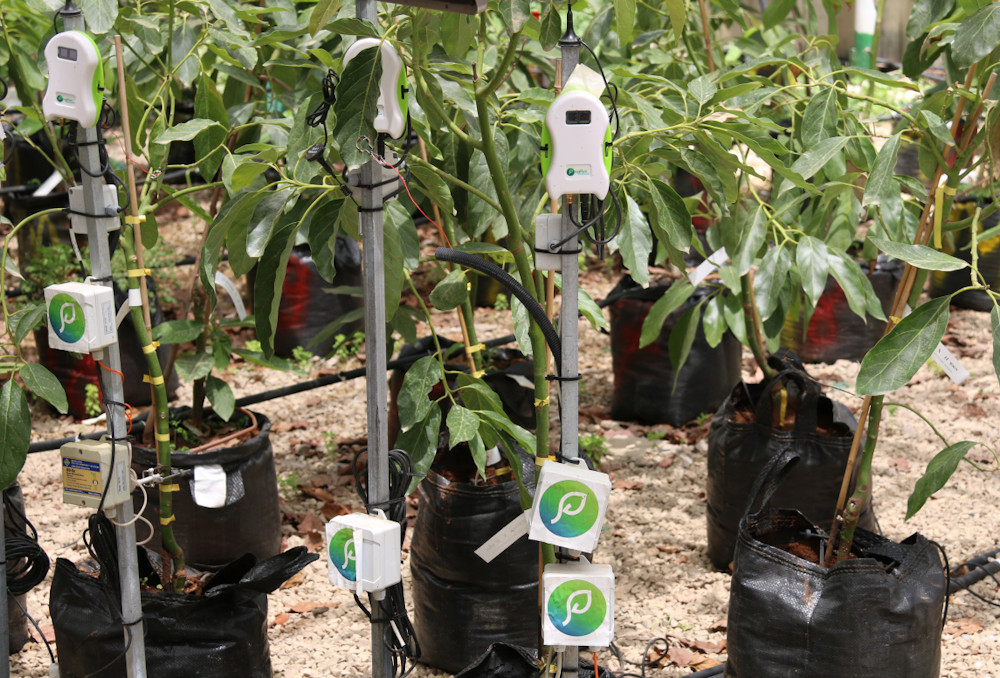
rows of plants growing out of black plastic bags, some with metal poles and wires holding white plastic devices attached to the plants
Precision agriculture can include sensors that monitor crops, such as these avocado plants.
Simple loquat/Wikimedia

As researchers in cybersecurity and national security at the National Counterterrorism Innovation, Technology, and Education Center, we see cause for concern. The advent of precision farming comes at a time of significant upheaval in the global supply chain and as the number of foreign and domestic hackers with the ability to exploit this technology continues to grow.

New opportunities for exploitation

Cyberattacks against agricultural targets are not some far-off threat; they are already happening. For example, in 2021 a ransomware attack forced a fifth of the beef processing plants in the U.S. to shut down, with one company paying nearly $11 million to cybercriminals. REvil, a Russia-based group, claimed responsibility for the attack.

Similarly, a grain storage cooperative in Iowa was targeted by a Russian-speaking group called BlackMatter, who claimed that they had stolen data from the cooperative. While previous attacks have targeted larger companies and cooperatives and aimed to extort the victims for money, individual farms could be at risk, too.
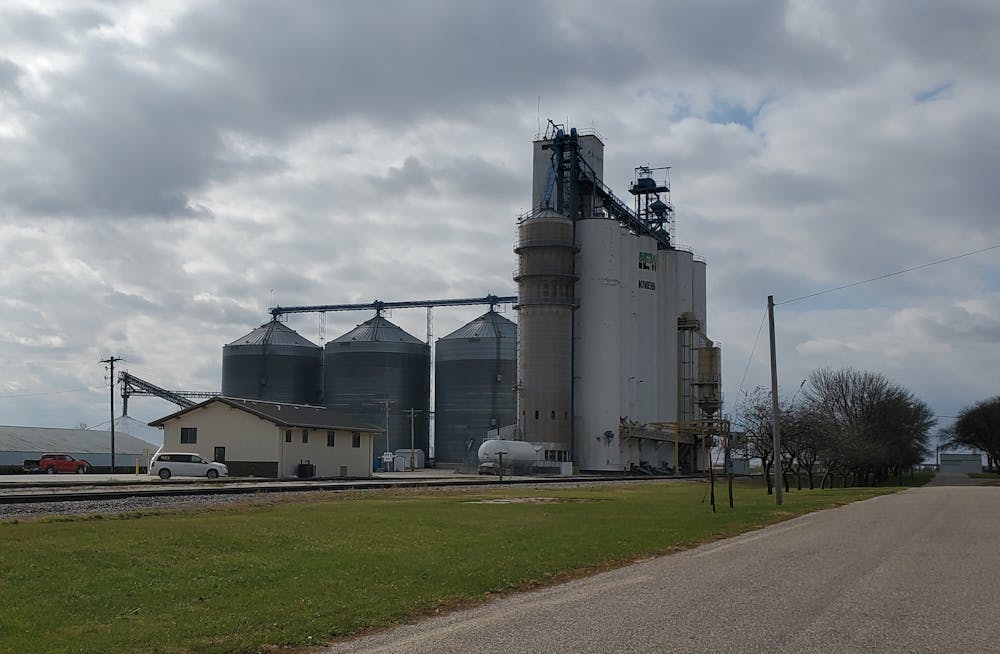
three squat cylindrical structures with conical tops connected by a pipe stand in a row perpendicular to a cluster of narrower, taller vertical cylindrical structures topped by a catwalk
This grain storage facility is run by New Cooperative, a farm cooperative in Iowa that was hit by a ransomware attack in 2021.
Jstuby/Wikimedia

The integration of technologies into farm equipment, from GPS-guided tractors to artificial intelligence, potentially increases the ability of hackers to attack this equipment. And though farmers might not be ideal targets for ransomware attacks, farms could be tempting targets for hackers with other motives, including terrorists.

For example, an attacker could look to exploit vulnerabilities within fertilizer application technologies, which could result in a farmer unwittingly applying too much or too little nitrogen fertilizer to a particular crop. A farmer could then end up with either a below-expected harvest, or a field that has been over fertilized, resulting in waste and long-term environmental ramifications.

Slow to appreciate the threat

Disruption to sensitive industries and infrastructure gives attackers higher returns for their efforts. This means that the increasing stress on the global food supply raises the stakes and creates a stronger motivation to disrupt the U.S. agriculture sector.

Unlike other critical industries such as finance and health care, the farming industry has been slow to recognize cybersecurity risks and take steps to mitigate them. There are several possible reasons for this sluggishness.

One is that many farmers and agricultural providers haven’t viewed cybersecurity as a significant enough problem compared with other risks they face such as floods, fires and hail. A 2018 Department of Homeland Security report that surveyed precision agriculture farmers throughout the U.S. found that many did not fully understand the cyberthreats introduced by precision agriculture, nor did they take these cyber-risks seriously enough.

This lack of preparedness leads to another reason: limited oversight and regulation from government. In 2010, the U.S. Department of Agriculture classified cybersecurity as a low priority. While this classification was upgraded in 2015, the farming sector is likely to be playing catch-up for years. While other critical infrastructure industries have developed and published numerous countermeasures and best practices for cybersecurity, the same cannot be said for the farming sector.

The Biden administration has indicated that it is willing to help farmers take steps to protect their cyber infrastructure, but as of this writing it has not released public guidelines to assist with this effort.

All-hands approach

In addition to the pressing need for policy guidance and resources from federal, state and local governments to prevent this type of cyberattack, there is room for academia and industry to step up.

From an academic research perspective, multidisciplinary efforts that bring together researchers from precision agriculture, robotics, cybersecurity and political science can help identify potential solutions. To this end, we and researchers at the University of Nebraska-Lincoln have launched the Security Testbed for Agricultural Vehicles and Environments.

Farming equipment manufacturers and other industry organizations can help by designing and engineering equipment to account for cybersecurity considerations. This would lead to the manufacture of farming equipment that not only maximizes food production yields but also minimizes exposure to cyberattacks.The Conversation

George Grispos, Assistant Professor of Cybersecurity, University of Nebraska Omaha and Austin C. Doctor, Assistant Professor of Political Science, University of Nebraska Omaha

This article is republished from The Conversation under a Creative Commons license. Read the original article.

cybersecurity Fertiliser food security Food supply precision agriculture ransomware technology
Share. Facebook Twitter Pinterest LinkedIn Tumblr Email
The Conversation
  • Website

Related Posts

South Africa Could Unlock SME Growth By Exploiting AI’s Potential Through Corporate ESD Funds

2026-01-28

How Local Leaders Can Shift Their Trajectory In 2026

2026-01-23

Why Legal Businesses Must Lead Digital Transformation Rather Than Chase It

2026-01-23

Directing The Dual Workforce In The Age of AI Agents

2026-01-22

The Productivity Myth That’s Costing South Africa Talent

2026-01-21

The Boardroom Challenge: Governing AI, Data And Digital

2026-01-20

Ransomware: What It Is And Why It’s Your Problem

2026-01-19

AI Can Make The Dead Talk – Why This Doesn’t Comfort Us

2026-01-19

Can Taxpayers Lose By Challenging SARS?

2026-01-16
Leave A Reply Cancel Reply

DON'T MISS
Breaking News

SARB Holds Repo Rate Steady in Cautious Monetary Policy Decision

In a world described as fractured and fragile, the South African Reserve Bank (SARB) has…

How Many Smart ID Cards Were Issued In South Africa in 2025

2026-01-29

Huawei Says The Next Wave Of Infrastructure Investment Must Include People, Not Only Platforms

2026-01-21

South Africa: Best Starting Point In Years, With 3 Clear Priorities Ahead

2026-01-12
Stay In Touch
  • Facebook
  • Twitter
  • YouTube
  • LinkedIn
OUR PICKS

How a Major Hotel Group Is Electrifying South Africa’s Travel

2026-01-29

Volvo C70: 30 Years Of The Car That Changed The Way Volvo Looked

2026-01-29

The EX60 Cross Country: Built For The “Go Anywhere” Attitude

2026-01-23

Mettus Launches Splendi App To Help Young South Africans Manage Their Credit Health

2026-01-22

Subscribe to Updates

Get the latest tech news from TechFinancials about telecoms, fintech and connected life.

About Us

TechFinancials delivers in-depth analysis of tech, digital revolution, fintech, e-commerce, digital banking and breaking tech news.

Facebook X (Twitter) Instagram YouTube LinkedIn WhatsApp Reddit RSS
Our Picks

Monerohub.io Launches as the Essential Central Gateway to the Monero Ecosystem

2026-01-29

Luxbit.AI Introduces Streamlined Withdrawal Framework to Enhance User Trust and Accessibility

2026-01-29

SARB Holds Repo Rate Steady in Cautious Monetary Policy Decision

2026-01-29
Recent Posts
  • Monerohub.io Launches as the Essential Central Gateway to the Monero Ecosystem
  • Luxbit.AI Introduces Streamlined Withdrawal Framework to Enhance User Trust and Accessibility
  • SARB Holds Repo Rate Steady in Cautious Monetary Policy Decision
  • Alleged R1 Billion International Scam Syndicate Members Arrested
  • How Many Smart ID Cards Were Issued In South Africa in 2025
TechFinancials
RSS Facebook X (Twitter) LinkedIn YouTube WhatsApp
  • Homepage
  • Newsletter
  • Contact
  • Advertise
  • Privacy Policy
  • About
© 2026 TechFinancials. Designed by TFS Media. TechFinancials brings you trusted, around-the-clock news on African tech, crypto, and finance. Our goal is to keep you informed in this fast-moving digital world. Now, the serious part (please read this): Trading is Risky: Buying and selling things like cryptocurrencies and CFDs is very risky. Because of leverage, you can lose your money much faster than you might expect. We Are Not Advisors: We are a news website. We do not provide investment, legal, or financial advice. Our content is for information and education only. Do Your Own Research: Never rely on a single source. Always conduct your own research before making any financial decision. A link to another company is not our stamp of approval. You Are Responsible: Your investments are your own. You could lose some or all of your money. Past performance does not predict future results. In short: We report the news. You make the decisions, and you take the risks. Please be careful.

Type above and press Enter to search. Press Esc to cancel.

Ad Blocker Enabled!
Ad Blocker Enabled!
Our website is made possible by displaying online advertisements to our visitors. Please support us by disabling your Ad Blocker.