

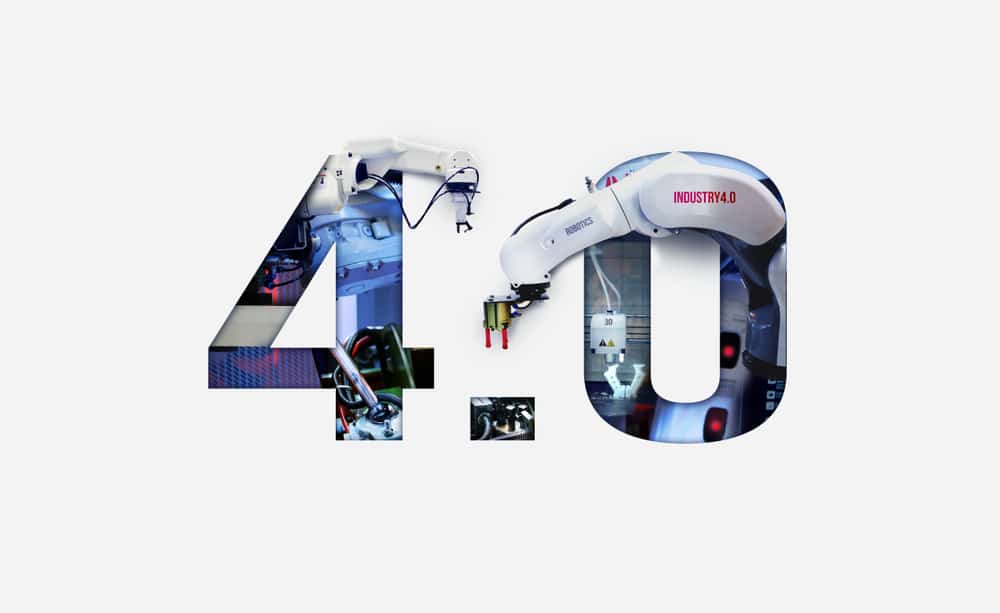
Narrative frames are fundamental to unifying ideologies. They frame what is possible and impossible, which ideas can be accepted and which must be rejected. In her book, Digital Democracy, Analogue Politics, storyteller and political analyst Nanjala Nyabola examines the framing of the Fourth Industrial Revolution narrative in this light.
She argues that it is being used by global elites to deflect from the drivers of inequality and enable ongoing processes of expropriation, exploitation and exclusion. During a recent policy dialogue on the Future of Work(ers) she commented:
The real seduction of this idea is that it’s apolitical. We can talk about development and progress, without having to grapple with power.
The Fourth Industrial Revolution’s chief ideologue is Karl Schwab, chair of the World Economic Forum who published an influential book by the same name. In it he argues that digital innovations are transforming the ways in which people live, work and relate to one other. These include artificial intelligence and robotics, quantum cloud computing and block chain technology.
Compared to previous industrial revolutions, he maintains, the Fourth Industrial Revolution is evolving at an exponential pace, reorganising systems of production, management and governance in unprecedented ways.
But there is growing critique, particularly from the global South, of this capital-friendly framing of the Fourth Industrial Revolution. Many are questioning whether it should be considered a revolution at all.
The available evidence suggests that the proliferation of digital technologies has been highly uneven, driven by an older generation of technological innovation, and used to reproduce rather than transform unequal social relations.
We share the view that there is nothing predetermined or linear about what digital technology is developed, how it is used, and for what end. The challenge is how to harness digital innovations to improve the conditions of work and life, while holding capital accountable.
Arguments against
Historian Ian Moll questions whether the current myriad of digital technological innovations constitute an industrial revolution. After all, revolutions are not characterised by technological changes alone. Rather they’re driven by transformations in the labour process, fundamental changes in workplace relations, shifts in social relations and global socioeconomic restructuring.
The industrial revolution, for example, gave rise to factories that changed how people worked as well as where they lived. The centralisation of workplaces saw growing urbanisation, deepening class divides between the rich and the poor. It also saw the emergence of trade unions.
It is clear that digital technologies are reshaping the structure of the labour market and conditions of work. They are doing this through automation and labour replacement, the informalisation or Uberization of work, the imposition of algorithmic management and commodification of data.
But they seem to be deepening rather than transforming historic patterns of inequality along the lines of class, gender, race, citizenship and geographic location.
As Nyabola put it:
Data is the new oil … data points which can be extracted for profit.
Despite critiques, the African Union (AU) has embraced the Fourth Industrial Revolution as a “watershed moment for Africa’s development”. The AU describes it as an opportunity to leapfrog into the digital era, increase global competitiveness and generate new sources of employment.
Scholar-activist Trevor Ngwane argues in the edited volume, the Fourth Industrial Revolution: a Sociological Critique, that technological innovation can indeed be beneficial for the working class. It can reduce drudgery, improve working conditions and free up more time for people to engage in other meaningful activities.
The problem is that the fruits of technological innovation are being monopolised by a globalised capitalist class. Take the example of digital labour platforms. Financed primarily by venture capital funds in the global North, they have set up businesses in the global South without investing in assets, hiring employees or paying into state coffers.
This process is being buttressed by a framing that portrays the current terms of innovation as inevitable and thus uncontestable.
As Ngwane reflected during the policy dialogue:
Who can question something which is moving along the laws of nature, of history, of technology?
Setting parameters
For community practitioner Tessa Dooms, there are two potential roads:
We can allow capital to do what it wants. Or we can start imagining a world where we set the parameters for what tech should be.
Dooms agrees that the narrative of the Fourth Industrial Revolution is more aspiration than reality. But it’s precisely because it is aspirational that its terms can be shaped. What is the place of Africans in an increasingly digitised world? How are technologies affecting people’s lives, identities and access to opportunities? How can innovations advance a more just society, where people are freed up to do meaningful work? How can states use regulations and other means to ensure the benefits of technological innovation are more equally shared?
The Future of Work(ers) Research Group at the Southern Centre for Inequality Studies at the University of the Witwatersrand is hosting a six-part dialogue series. The aim is to generate further debate on the relationship between digital technologies, the changing nature of work(ers) and the implications for inequality.
Seipati Mokhema, an Associate Researcher with the Future of Work(ers), contributed to this article.
Ruth Castel-Branco, Research Manager, University of the Witwatersrand and Hannah J. Dawson, Senior Researcher, Southern Centre for Inequality Studies, University of the Witwatersrand
This article is republished from The Conversation under a Creative Commons license. Read the original article.
