

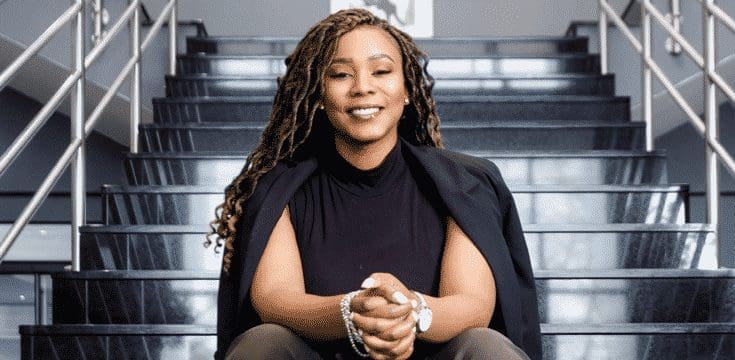
Nelisiwe Masango – Financial Markets Analyst, CEO of Ubuntu Invest and one of Entrepreneur Magazine’s Top 50 Black African Women Entrepreneurs to Watch – discusses the ever-present gender and racial wealth gap in the 21st century. Nelisiwe believes that society has the power to make a difference by investing in small businesses that empower others, and by encouraging children to accept and embrace each other’s differences.
“We cannot escape the fact that South Africa is a highly racialised and gender biased society. According to Stats SA, the average female worker earns 30% less than a male counterpart for doing the same job. Income distributions show heavily racialised inequality in the South African labour market. And the reality is, the highest percentage of people who are unemployed are black. When compared to their white counterparts, black wage earners are simply earning significantly less.
“The legacy of Apartheid has left South Africa unequal in so many ways. It excluded a large chunk of our population from economic opportunities, and black women remain among the most disempowered. Coupled with the slow economic growth of the past decade, not enough jobs have been created to absorb the unemployed and new entrances to labour market.
The way forward
“It doesn’t all have to be bad news, though. Empowering those who would historically have not been given the opportunity, despite having the aptitude, starts with a stronger focus on skills development. This, combined with conscious creation of employment opportunities at a societal level, has the potential to reduce inequality, one person at a time.
“South Africa relies on a progressive tax system and social safety net to reduce inequality. But the roller coaster of increased national debt means that government has had to reduce the scope of fiscal policy as a leveraging redistributive tool.
“This leaves much less available to divert funds to help solve the problems poor South Africans are facing. If government, however, shifted its collective mindset to become more responsive, the current situation would not be so hugely instrumental in perpetuating the problem.
South Africa’s position and what society can do to help
“Despite legislation, which on paper is more progressive than it is in most countries, the reality is that South Africa is still one of the most unequal societies in the world. The World Inequality Lab reported that the richest 10% of our population own more than 85% of household wealth, while over half the population has more liability than assets. We can’t just rely on legislation to solve the problem. We need a mindset shift. As a society, we can make a conscious choice to support and invest in small businesses that empower marginalised sections of the population – particularly black women and youth.
“We can hold those in power accountable for misuse of funds and corruption. Funds meant for upliftment of the poor are, all too often, squandered on various ‘empowerment projects’ that don’t tackle the problem directly or see funds ‘disappear’.
Starting young
“Our schools have the perfect opportunity to make a lasting impact on how society solves the inequality problem. It goes beyond just the curriculum. Rather than purely focusing on textbooks, the concept of inclusion could be taught as a soft skill from a young age. Immersing young people from diverse backgrounds in each other’s cultures and belief systems will instil acceptance and respect. The problem should not be an elephant in the room. It should be addressed head-on.
“We should verbalise and acknowledge that inequality and privilege do exist in contemporary South Africa. Let’s not tiptoe around it. White males are the most privileged demographic in the country and black females are the most disadvantaged. It is through the acceptance of our privileged positions that we can address inequality in South Africa. And doing this through play, conversations and interaction on the playground is the perfect place to ‘start the class’.
Breaking the mould
“Black women can empower themselves despite the very real gender and race gap in the workplace. It’s important not to allow the challenges we face to be a reason to give up. It’s all about accepting that the system is flawed and that the only way to defeat it is by working hard. As a black woman, you must know that to make it, you may have to work four times harder than your white male counterpart; three times harder than your white female counterpart, and twice as hard as your black male counterpart.
“If you can accept this and decide to go for it anyway, you can and will succeed. Women can take ownership of their financial independence, and with that comes the benefit of endless freedom. Ultimately, women can contribute to their society effectively, run their businesses and not just be seen as someone that belongs in the kitchen.
The 21st Century and beyond
“The 21st century has brought natural, unexpected bridges to gaps in societal equity. Communication platforms – particularly social media – have created a space where women and other marginalised groups can give themselves a voice. We are now in a better position to create awareness, market ourselves, rally support and draw attention to injustices in a way that gets people talking. And ultimately, this is the biggest step we can take – get talking, start conversations and be heard.”
