
Close Menu
  • Homepage
  • News
  • Cloud & AI
  • ECommerce
  • Entertainment
  • Finance
  • Opinion
  • Podcast
  • Contact

Subscribe to Updates

Get the latest technology news from TechFinancials News about FinTech, Tech, Business, Telecoms and Connected Life.

What's Hot

Digitap ($TAP) Crushes NexChain with Real Banking Utility: Best Crypto to Buy in 2026

2026-02-07

Football Fans Can Share Their ‘Super Bowl Spread’  With The Chance To Win an NFL Jersey

2026-02-07

Why Traditional Banks Need Mobile Money Solutions to Survive the Next 5 Years

2026-02-07
Facebook X (Twitter) Instagram
Trending
  • Digitap ($TAP) Crushes NexChain with Real Banking Utility: Best Crypto to Buy in 2026
Facebook X (Twitter) Instagram YouTube LinkedIn WhatsApp RSS
TechFinancials
  • Homepage
  • News
  • Cloud & AI
  • ECommerce
  • Entertainment
  • Finance
  • Opinion
  • Podcast
  • Contact
TechFinancials
Home»Opinion»FaceApp and the Dark Side of AI
Opinion

FaceApp and the Dark Side of AI

ContributorBy Contributor2019-08-13No Comments5 Mins Read
Share Facebook Twitter Pinterest LinkedIn Tumblr Email
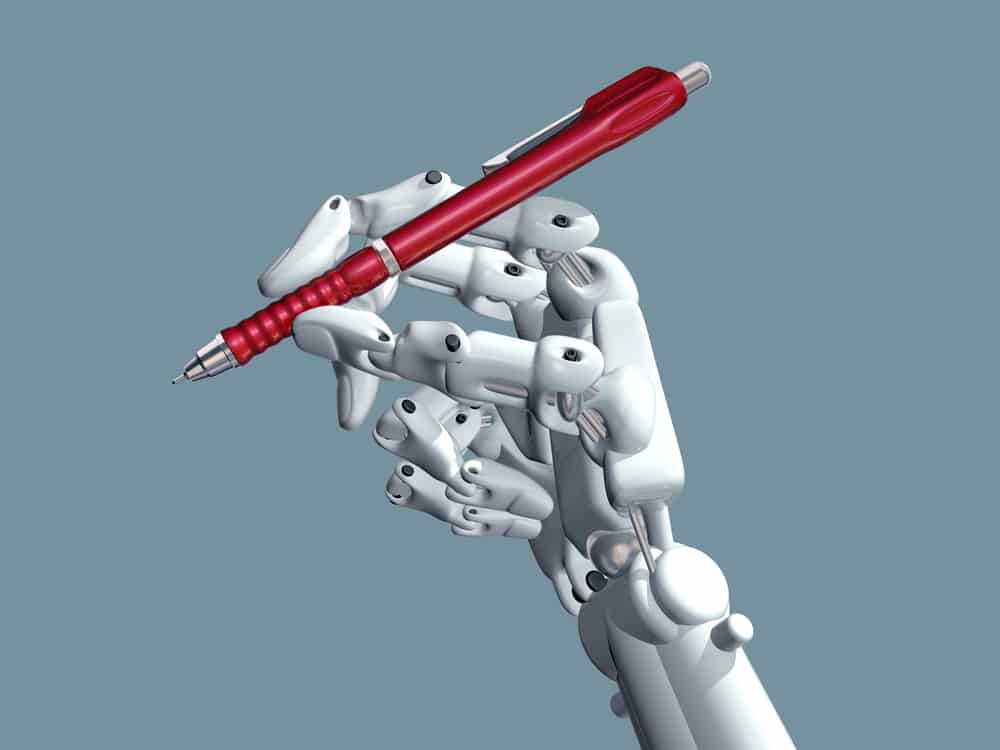
Robots won’t hold the pens just yet
Robots won’t hold the pens just yet, but they can help people do the work. Paul Fleet/Shutterstock.com
Share
Facebook Twitter LinkedIn Pinterest Email Copy Link

By Lee Naik

Terminator and The Matrix got it wrong. We all thought the villains of the AI era would be killer robots or hostile programmes. Instead, they’re face-ageing apps and YouTube creators with too much time on their hands.

Turns out the biggest problem with machine learning isn’t the machines at all – it’s the people behind them. FaceApp may look like just another fun viral craze, but look closely at those terms and conditions and you’ll realise you’ve signed away your image to a little-known Russian business forever.

The fears around FaceApp are just another reminder that technologies like AI aren’t blank slates free from the intentions of their creators. It’s no secret that, for all their potential to do good, algorithms are as prone to bias as the people who create them. Cognitive technologies are designed to imitate the learning process of the human mind – it’s only natural that it should also emulate its flaws.

There’s also another more sinister problem – what happens when you have bad actors exploiting those weaknesses or purposefully creating something intended to do harm?

Recently, YouTube has come under fire for pushing users towards harmful and extremist viewpoints over time. Then there’s Twitter’s much-publicised struggle with white supremacist accounts. We’ve gone from Tay, the racist chatbot, to psychopathic AIs and Russian hackers.

The problem is extremists know exactly how to manipulate search algorithms to expose their world views to more people. While legitimate organisations are getting to grips with 4IR, criminals have been comfortably using automation to commit fraud for years. And put the wrong people in charge of facial recognition technology and suddenly you’ve got a real threat to personal privacy.

In the wrong hands, machine learning can become a force for harm. It’s up to the rest of us to make sure it lives up to its incredible potential to do good and solve problems.

Actions Matter

We all remember Google’s “don’t be evil” motto, which it dropped in 2018 to great scepticism. What most people don’t remember is the replacement line – “do the right thing”.

It’s a fitting change in the age of fake news and picture-perfect video forgery. Setting out to do no harm is all well and good, but it’s not enough anymore. Organisations are waking up to the fact that the only way to prevent their platforms from being used to do harm is to proactively do good.

For some, this means fighting fire with fire. The UK government has a machine learning tool designed to automatically detect ISIS propaganda. Twitter and Google themselves are employing their AI tools to comb through and scrub their own data.

Many are also trying to define a universal set of ethics for machine learning and AI – an updated version of Asimov’s Laws of Robotics you might remember from the movie I, Robot. The EU and the OECD are among those working towards a set of AI principles, and most major tech players have their own ethics boards.

ai robot
3d rendering ai robot think or compute. Phonlamai Photo / Shutterstock.Com

But we shouldn’t rely on the Googles, governments and Will Smiths of the world to do the heavy lifting. Every organisation has a role to play in shaping AI as a force for good. From the smallest chatbot to Watson itself, we should be working to create algorithms that offer transparency and accountability.

How to Build an Accountable AI

By their very nature, artificial intelligence technologies are somewhat unpredictable, but there are ways to make sure you’re always on the right track. There are many strategies, guidelines and even Asimov’s laws of robotics to lean on but for every organization, I believe there are three key principles to throw into the mix:

  • The data is the key – Any digital technology is only as good as its data, and this is even truer for artificial intelligences that teach themselves over time. Throw in enough flawed data early on and suddenly you’ve got a vicious cycle of bad assumptions multiplying other bad assumptions. Any AI is going to need a wide variety of reliable data streams to learn effectively.
  • Use purpose as your guiding light – Ultimately, any algorithm needs a reason to learn in the first place, a clear guiding purpose. Without a strong purpose, it’s easy for an ML application to go astray, and just as easy for the people behind the application to miss that it’s happening.
  • Learn from your machines – Finally, it’s important not to get too focused on the ‘machine’ part that you forget about the ‘learning’. The power of cognitive technologies isn’t in how smart they are but in how much they enable us to embrace learning and continuous improvement as a way of life. Make sure your data and technology teams embody this so that they are learning from the deviations and the unexpected detours of your AI applications.

Ultimately, the best way to extract real value and outcomes from technology is to make sure there are good people with good intent and accountability behind them. Because if you’re not willing to take ownership, someone else will find a way.

About Lee Naik

Lee Naik was named one of LinkedIn’s Top Voices in Technology and is recognized as one of SA’s leading digital and technology transformation experts. Lee is presently the CEO of TransUnion Africa where he leads a portfolio of big data, digital and information services businesses that help organizations make more informed decisions and consumers manage their personal information to lead to a higher quality of life.

Check out more articles and blog from Lee on LinkedIn follow him on @naikl for his latest commentary.

AI apps Artificial intelligence Robots YouTube
Share. Facebook Twitter Pinterest LinkedIn Tumblr Email
Contributor

Related Posts

Private Credit Rating Agencies Shape Africa’s Access To Debt. Better Oversight Is Needed

2026-02-03

Why South Africa Cannot Afford To Wait For Healthcare Reform

2026-02-02

SA Auto Industry At Crossroads: Cheap Imports Threaten Future

2026-02-02

Stablecoins: The Quiet Revolution South Africa Can’t Ignore

2026-02-02

South Africa Could Unlock SME Growth By Exploiting AI’s Potential Through Corporate ESD Funds

2026-01-28

How Local Leaders Can Shift Their Trajectory In 2026

2026-01-23

Why Legal Businesses Must Lead Digital Transformation Rather Than Chase It

2026-01-23

Directing The Dual Workforce In The Age of AI Agents

2026-01-22

The Productivity Myth That’s Costing South Africa Talent

2026-01-21
Leave A Reply Cancel Reply

DON'T MISS
Breaking News

Digitap ($TAP) Crushes NexChain with Real Banking Utility: Best Crypto to Buy in 2026

The crypto presale market in 2026 has seen dozens of projects compete for investor attention.…

Dutch Entrepreneurial Development Bank FMO Invests R340M In Lula To Expand SME funding In SA

2026-02-03

Paarl Mall Gets R270M Mega Upgrade

2026-02-02

Huawei Says The Next Wave Of Infrastructure Investment Must Include People, Not Only Platforms

2026-01-21
Stay In Touch
  • Facebook
  • Twitter
  • YouTube
  • LinkedIn
OUR PICKS

Vodacom Reports Robust Q3 Growth, Driven By Diversification And Strategic Moves

2026-02-04

South Africa’s First Institutional Rand Stablecoin, ZARU, Launches

2026-02-03

The EX60 Cross Country: Built For The “Go Anywhere” Attitude

2026-01-23

Mettus Launches Splendi App To Help Young South Africans Manage Their Credit Health

2026-01-22

Subscribe to Updates

Get the latest tech news from TechFinancials about telecoms, fintech and connected life.

About Us

TechFinancials delivers in-depth analysis of tech, digital revolution, fintech, e-commerce, digital banking and breaking tech news.

Facebook X (Twitter) Instagram YouTube LinkedIn WhatsApp Reddit RSS
Our Picks

Digitap ($TAP) Crushes NexChain with Real Banking Utility: Best Crypto to Buy in 2026

2026-02-07

Football Fans Can Share Their ‘Super Bowl Spread’  With The Chance To Win an NFL Jersey

2026-02-07

Why Traditional Banks Need Mobile Money Solutions to Survive the Next 5 Years

2026-02-07
Recent Posts
  • Digitap ($TAP) Crushes NexChain with Real Banking Utility: Best Crypto to Buy in 2026
  • Football Fans Can Share Their ‘Super Bowl Spread’  With The Chance To Win an NFL Jersey
  • Why Traditional Banks Need Mobile Money Solutions to Survive the Next 5 Years
  • Spotify Brings Audiobooks to South Africa
  • Anjouan Corporate Services Reshapes Cross-Border Brokerage Licensing Strategy for UAE-Focused Firms
TechFinancials
RSS Facebook X (Twitter) LinkedIn YouTube WhatsApp
  • Homepage
  • Newsletter
  • Contact
  • Advertise
  • Privacy Policy
  • About
© 2026 TechFinancials. Designed by TFS Media. TechFinancials brings you trusted, around-the-clock news on African tech, crypto, and finance. Our goal is to keep you informed in this fast-moving digital world. Now, the serious part (please read this): Trading is Risky: Buying and selling things like cryptocurrencies and CFDs is very risky. Because of leverage, you can lose your money much faster than you might expect. We Are Not Advisors: We are a news website. We do not provide investment, legal, or financial advice. Our content is for information and education only. Do Your Own Research: Never rely on a single source. Always conduct your own research before making any financial decision. A link to another company is not our stamp of approval. You Are Responsible: Your investments are your own. You could lose some or all of your money. Past performance does not predict future results. In short: We report the news. You make the decisions, and you take the risks. Please be careful.

Type above and press Enter to search. Press Esc to cancel.

Ad Blocker Enabled!
Ad Blocker Enabled!
Our website is made possible by displaying online advertisements to our visitors. Please support us by disabling your Ad Blocker.