



Would you let an AI break into your own company at 3:00 a.m.?
A few years ago, any CEO would have called that crazy. Today, big companies are starting to say yes, because twenty-year-old hackers with cheap AI tools are already trying the front door at 3:05.
Image courtesy of David Bratslavsky
Walk into almost any boardroom right now, and you feel that tension. Companies are pouring millions into AI, yet most projects die quietly in testing without making a dime. Leaders know standing still is dangerous, and moving blindly can blow up in their face.
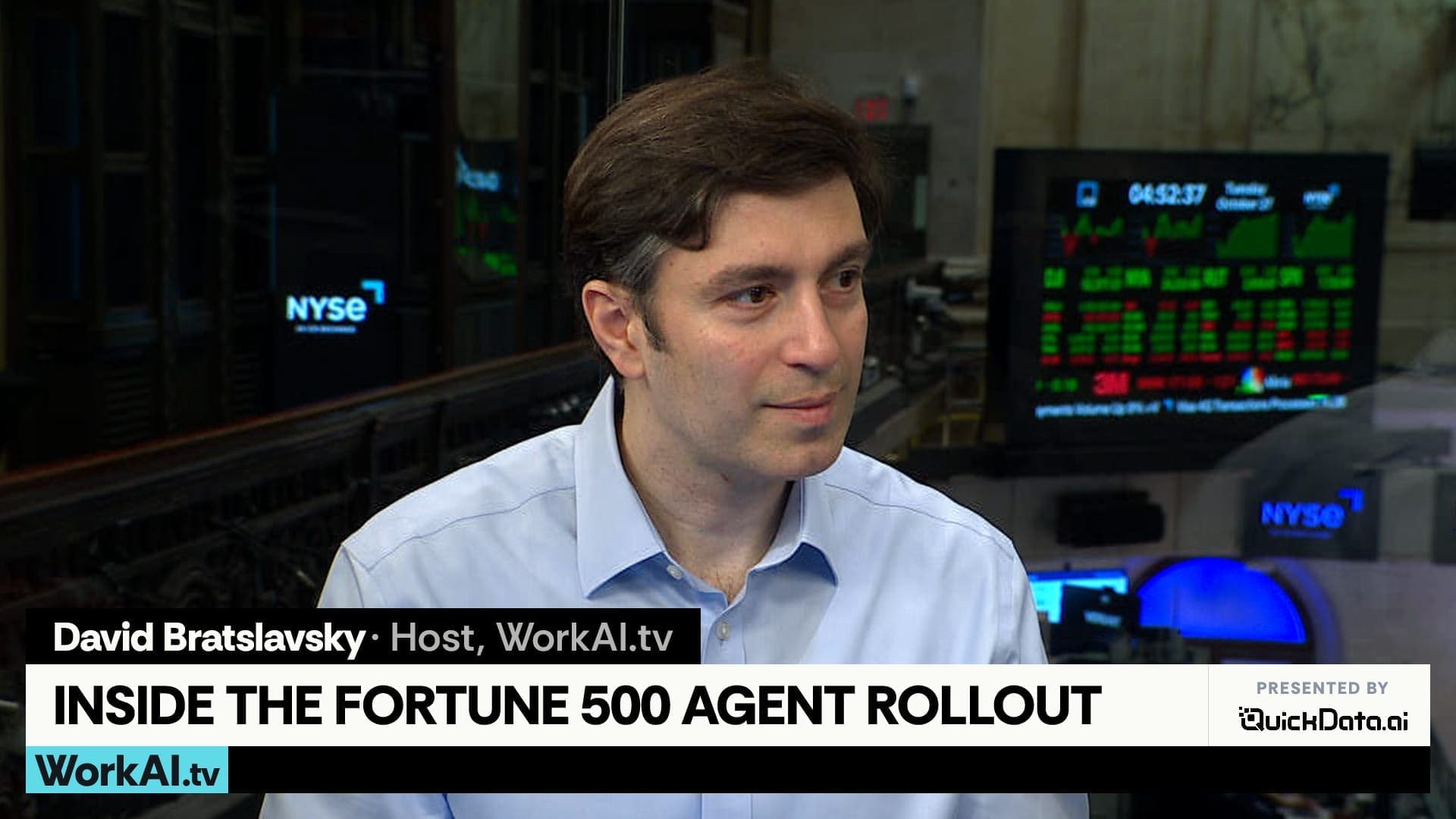
On the floor of the New York Stock Exchange, David Bratslavsky gets the people running major companies to talk honestly about what works as host of WorkAI.tv. Across the WorkAI.tv interview series, tech chiefs, security bosses, and founders skip the buzzwords to share how big businesses use AI safely to grow profits.
“Boards are tired of flashy demos that fall flat six months later,” Bratslavsky says. “At the stock exchange, leaders care about two things: can we run this safely, and where does it show up in profits?”
Take the episode behind that 3:00 a.m. question. Sitting down with Bratslavsky at the NYSE, Terra Security CEO Shahar Peled explained why traditional cyber defense is broken. Companies used to hire testers once a year to hunt for security holes, then stick the report in a drawer. Now engineers update software every afternoon, making yesterday’s clean report useless by morning. Peled shared how firms turn friendly AI loose on their own systems around the clock, with strict safety brakes on, to catch tiny cracks before criminals string them into a breach.
In another episode, Nextdoor’s chief information and security officer, Shyam Bhojwani, tackled a mistake burning cash across corporate America. Companies rush to buy shiny AI bots while their internal files and access rules are still a mess, and employees are already sneaking unapproved AI tools into work behind IT’s back. Bhojwani shared how Nextdoor skipped the hype, cleaned up who could see what inside its company search first, and only backed AI projects tied to real business results.
Across WorkAI.tv, one pattern repeats: handing staff a generic chat login and hoping for magic rarely cuts real costs. Winners aim AI at specific, expensive headaches instead. One segment showed how Alaska Airlines and Porsche team up with venture builder Vantora to launch dedicated AI startups around \$50 million in operational problems, then buy the finished tech back into their own business.
Those conversations also show office careers splitting in two. PwC job data shows workers who know how to run AI tools already earn over 50% more than peers who do not, even as shrinking entry-level grunt work forces young hires to manage AI workflows on day one. As Bratslavsky’s guests keep warning, you cannot buy an AI edge off a shelf without training your people to drive it.
Bratslavsky cuts straight to the point because he did not come up through television. Before hosting at the stock exchange, the former software CTO and real estate investor learned what works by fixing slow, expensive routines in commercial real estate.
His path into AI started with QuickData.ai. While earlier real estate startups failed trying to pull dealmakers off Microsoft Excel, Bratslavsky built right inside it. Over 800 multifamily investors, brokers, and lenders use QuickData’s tools, led by an Excel add-in that underwrites a deal in under five minutes by automatically parsing rent rolls, T12s, and offering memorandums straight into any Excel model so users focus on closing deals instead of copy-pasting.
Property owners soon hired Bratslavsky as an AI consultant across multifamily, industrial, and office firms with two goals: earn more money and spend less.
To grow revenue, his workflows help buyers spot undervalued buildings faster, let brokers and lenders quote deals in hours to win mandates, catch missed rent increases and expense billings, and answer late-night tenant leads in seconds. To cut costs, automating lease reviews, monthly budget checks, and investor letters saves staff 15+ hours a month, letting firms grow without bloating payroll or paying endless retainers.
“Helping real estate owners protect every dollar of income taught me to spot AI hype in ten seconds,” Bratslavsky says. “Whether you own apartment buildings or run a public company at the stock exchange, technology only matters when it helps your team move faster and keep more profit.”
