


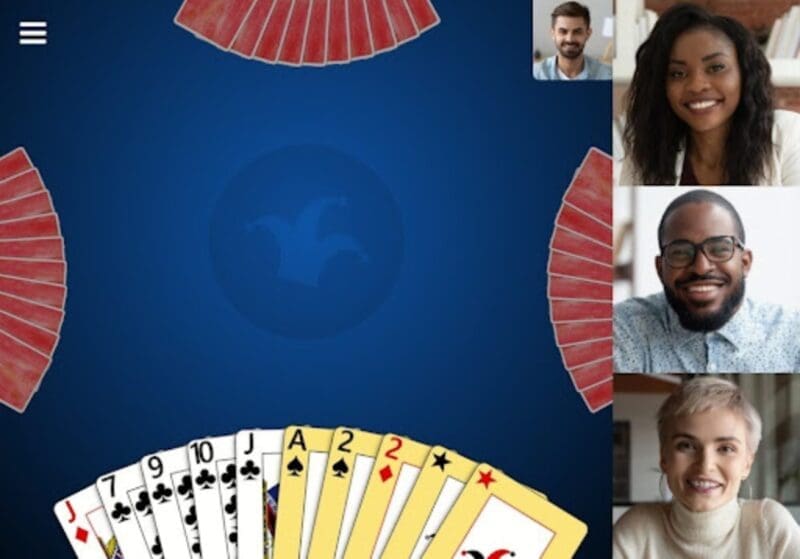

From connecting families during the pandemic to supporting live tournaments and cultural gatherings, Trickster Cards is giving traditional card games a new place in the digital world founded by Tony Ross and Ted Johnson.
There’s something about a card game that brings out a different side of people.
The quiet strategist. The overly confident partner. The friend who insists they know the rules better than everyone else. And, of course, the person who takes a friendly game a little too seriously.
For generations, card games have been a fixture at kitchen tables, family reunions, college dorms, and neighborhood gatherings. They’ve sparked friendships, fueled rivalries, and created memories that often outlast the games themselves.
For Tony Ross, co-founder of Trickster Cards, that familiarity helped inspire a business built around a simple idea: people should be able to enjoy their favorite card games together, even when they aren’t in the same room.
“We started Trickster Cards after struggling to play cards online with family,” Ross recalls. “We wanted to capture the experience of playing together at the table, even from miles away.”
Founded in 2014, Trickster Cards set out to make traditional card games more accessible across devices, allowing friends and family to connect through familiar games regardless of where they lived.
What began as a solution to a personal frustration would eventually find a much larger audience.
Finding Connection During the Pandemic
When the COVID-19 pandemic brought everyday life to a standstill, people began searching for new ways to stay connected. Family gatherings were canceled, social traditions were interrupted, and the simple pleasure of sitting around a table with friends suddenly became something many people missed.
For Trickster Cards, the moment brought renewed attention to the importance of social gaming.
Through games like Spades, Hearts, Bridge, and Euchre, the platform offered people a way to reconnect, compete, and maintain familiar traditions during an otherwise uncertain time.
As more people turned to virtual experiences, Trickster gained momentum, attracting attention from The New York Times and introducing the platform to a wider audience.
But while the pandemic highlighted the convenience of digital gaming, it also reinforced something Ross and his team had understood from the beginning: the real value of a card game isn’t necessarily the game itself.
It’s the connection between the people playing it.
As in-person gatherings returned, Trickster began exploring opportunities to bring that same sense of connection beyond the screen.
One of those early experiences took place at Aunts et Uncles, the Brooklyn-based café and creative space known for its intersection of food, art, and community.
The gathering brought the familiar energy of card playing into a physical setting, creating an opportunity for people to meet, compete, and enjoy the social experience that has made card games a lasting tradition.
It was a natural fit. Aunts et Uncles has built a reputation as a neighborhood gathering place where creativity and community come together.
For Trickster, the event represented an extension of its original mission.
Rather than viewing digital gaming and in-person experiences as competing ideas, the company sees an opportunity for the two to work together.
After all, the same game that connects friends across the country through a screen can just as easily bring strangers together around a table.
Celebrating the Culture of Competition
Trickster’s growing presence beyond the digital world has also included supporting events such as the World Series of Spades at The Roots Festival.
Spades has a particularly rich cultural history, especially within Black American communities, where the game has long been a staple of family gatherings, cookouts, college campuses, and social celebrations.
But its appeal reaches across cultures and generations.
The combination of strategy, teamwork, and friendly competition has made it a favorite among players from all walks of life. And anyone who has spent time around a competitive Spades table knows that the personalities can be just as entertaining as the game itself.
For many players, these gatherings are about more than winning. They’re about friendships, shared experiences, and traditions that continue to evolve with each generation.
By supporting competitive tournaments and cultural gatherings, Trickster is participating in the communities that have helped keep these games relevant while introducing them to new audiences.
Where Technology Meets Tradition
The gaming industry is constantly looking for what’s next. New platforms, new technologies, and new ways to capture people’s attention.
Trickster Cards is taking a different approach.
Rather than trying to reinvent the card game, the company is finding new ways to make familiar experiences accessible in an increasingly connected world.
A game that once required everyone to gather around the same table can now bring together friends and family across cities, states, and time zones.
But technology is only part of the equation.
“Seeing how our games help people connect is the best part of what we do,” says Ross. “Too many digital experiences isolate us. With Trickster Cards we get to bring people together by facilitating the community and camaraderie that makes card games special.”
It’s a perspective that helps explain the company’s interest in real-world experiences.
A digital game can reconnect old friends. A neighborhood gathering can introduce new ones. A competitive tournament can turn a casual hobby into a shared passion.
Each experience offers something different, but the underlying appeal remains the same.
A New Chapter for Social Gaming
What makes Trickster’s evolution interesting is how its story has come full circle.
The company began with a desire to make it easier for family members to play cards together from different locations.
During the pandemic, that idea became especially relevant as people searched for ways to maintain their relationships and traditions.
Today, Trickster is building on that foundation by supporting events and creating opportunities for players to connect in person.
From Brooklyn gatherings at Aunts et Uncles to the World Series of Spades, the company is showing how digital platforms can have a meaningful presence in the physical communities they serve.
And as conversations around technology increasingly focus on screen time, isolation, and the changing nature of human interaction, Trickster offers a different perspective on what digital entertainment can accomplish.
Sometimes technology doesn’t have to pull people away from one another.
Sometimes it can give them another reason to come together.
For Ross and the Trickster team, that idea has been there from the beginning. Because whether it’s happening around a kitchen table, inside a neighborhood café, at a competitive tournament, or through a digital platform, the appeal of playing cards remains remarkably simple.
The best part of the game has never been just the cards. It’s the people you’re playing with.
