


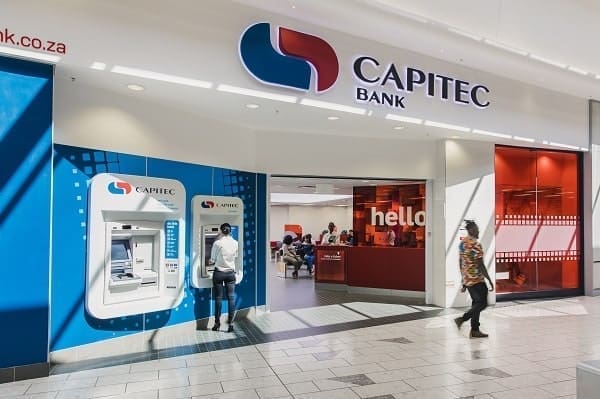
Capitec Limited today reported headline earnings growth of 19% to R9.5 billion for the six months ended 31 August 2026 (August 2025: R8.0 billion), a result underpinned by momentum across every one of its South African businesses.
While the Group’s diversified model delivered broad-based growth across Personal Banking, Business Banking, Fintech and Insurance, the standout strategic signal is how Capitec’s fintech businesses are extending its value proposition beyond traditional banking.
The Group’s Fintech businesses, Value-Added Services (VAS) and Capitec Connect, grew net income 30% to contribute R2.7 billion to Group headline earnings (2025: R2.1 billion), demonstrating how Capitec is extending its value proposition beyond traditional banking.
Fintech contributed 29% to total earnings, underlining its growing role in the Group’s earnings mix.
“Our results show the power of the diversified business we have built over decades on strong fundamentals of simplicity, affordability, accessibility and a personalised experience,” said Capitec.
“Every one of our South African businesses grew earnings this period, even as the global environment stayed uncertain and economic growth remained muted.
“We kept fees unchanged for a second year running, invested in technology and in serving our clients better, supporting our strategy to build a banking platform that delivers shared value at scale.”
Reflecting confidence in the sustainability of earnings, the Board declared an interim dividend of 3 110 cents per share, up 19% (August 2025: 2 620 cents). The cost-to-income ratio improved to 36% from 40%, evidence that investments made over the past several years are increasingly translating into scalable growth and stronger operating leverage.
Fintech at the centre of Capitec’s beyond-banking strategy
The fintech story is not a side project. It is becoming a core engine of Capitec’s growth. Net income from VAS increased 30% to R3.5 billion, driven by everyday services such as prepaid airtime, data and electricity. These are high-frequency, essential services that deepen client engagement and extend Capitec’s relevance beyond loans, deposits and transactions.
Capitec Connect continued to scale with the number of active clients in the past 3 months reaching 1.8 million (2025: 1.1 million), as more clients adopted it for affordable everyday connectivity, with data usage more than doubling from 14.9 million to 34.3 million gigabytes and voice usage growing 84%. Free Capitec-to-Capitec calls were launched to strengthen the proposition, with 70 million free minutes used during the reporting period. The business also launched the sale of cell phones on the Capitec app, and 27,000 devices were sold in the past 6 months.
That momentum matters because it shows how Capitec is building a wider ecosystem around the client. The fintech proposition is no longer only about digital banking access. It is about connectivity, payments, value-added services, embedded finance and everyday utility.
More clients, more fully banked, more digital
Growth was powered by a rising and increasingly engaged client base. Active clients grew to 26.6 million, while fully banked clients increased 11% to 10.4 million and now represent 41% of active clients (2025: 38%).
The shift toward fully banked relationships continues to lift the number of transactions per client. Clients using the Capitec app in the last month increased by 18% to 16.5 million, supporting Capitec’s position as SA’s leading digital bank.
Digital transaction volumes (excluding VAS) grew 26% to 662 million as clients transacting digitally rose 15% to 17.1 million. Adoption of digital payments accelerated sharply, with Apple Pay, Garmin Pay, Google Pay and Samsung Pay users up 68% to 2.4 million, supporting an 87% increase in spend to R52.1 billion.
These digital engagement metrics are the foundation on which Capitec’s fintech expansion is built. The more clients transact, connect and pay through Capitec’s ecosystem, the more the Group can extend value beyond traditional banking.
A diversified engine firing on all cylinders
The growth of Capitec’s headline earnings over the period is a testament to the strength of the Group’s fundamentals, the resilience of its diversified business model and the disciplined execution of its strategy. Personal Banking contributed 37% to group earnings and provides the platform on which the other businesses grow. Insurance contributed 27%, Fintech 29% and Business Banking contributed 6% to total earnings.
The group’s fundamental approach remains unchanged: simplicity, affordability, accessibility and a personalised experience across all its businesses.
Net interest income grew 7% to R12.7 billion, driven by 21% growth in loan disbursements. Net non-interest income rose 21% to R16.1 billion and now contributes 70% of income from operations after credit impairments (2025: 65%), underscoring the quality and diversity of the Group’s earnings.
Access to affordable credit remains key
Personal Banking extended affordable, accessible credit to more South Africans, growing its gross loan book beyond R100 billion for the first time, while maintaining credit granting within its through-the-cycle risk appetite.
Solutions including the credit card and term loans for purposes like education, vehicles or home improvement realised 9% growth in lending income to R11.4 billion for the period.
Capitec also boasts the best credit card for international travel since clients benefit from zero international card fees, zero forex commission, 1% cash back on all spend and free airport lounge access.
Insurance: protecting more clients
The Insurance business grew headline earnings by 22% to R2.5 billion, with the net insurance result increasing 28% to R3.0 billion (2025: R2.4 billion) on strong performances from Credit Life and Funeral Cover.
Active Credit Life policies increased to 2.2 million, all now underwritten on Capitec’s own long-term insurance licence, while the total funeral book grew to 3.8 million active policies covering over 17 million lives, reflecting the continued trust of Capitec’s clients.
The Life Cover sum assured increased by 75% in its 3rd year since launch to R126 billion. Capitec’s competitive pricing is reported to have saved Capitec clients R4.8 billion since the category was introduced.
Business Banking hits its stride
Following several years of investment, Business Banking is scaling rapidly. Headline earnings surged 52% to R609 million (2025: R402 million), supported by increased lending income, higher transaction volumes and improved operating leverage. Total Business Banking clients increased by 123% to 686,000 of which 237,000 are simple businesses using the Entrepreneur account.
Growth in merchant accounts accelerated to 141,000, up 66%, off the back of new payments devices and simple transparent pricing. Credit to businesses also grew by 37% to R35.5 billion, 12% of which is now made up of scored lending, which is opening up a new market designed to empower SMEs to grow.
Capitec continued to invest in initiatives that extend its impact beyond traditional banking. Since launch in March 2026, it has processed over 594 000 Smart ID applications in partnership with the Department of Home Affairs, expanding Smart ID access to 248 branches.
The group recently launched the Capitec Stokvel Account, a digital savings account enabling South Africa’s roughly 800 000 stokvels to save together with transparency and security.
The group remains focused on becoming the leading payments provider and expanding its embedded finance capabilities to bring more value-adding solutions to clients that extend beyond banking.
Part of this journey is the recent name change from Capitec Bank Holdings Limited to Capitec Limited, reflecting the group’s growing focus on delivering a wider range of value-adding solutions to its clients.
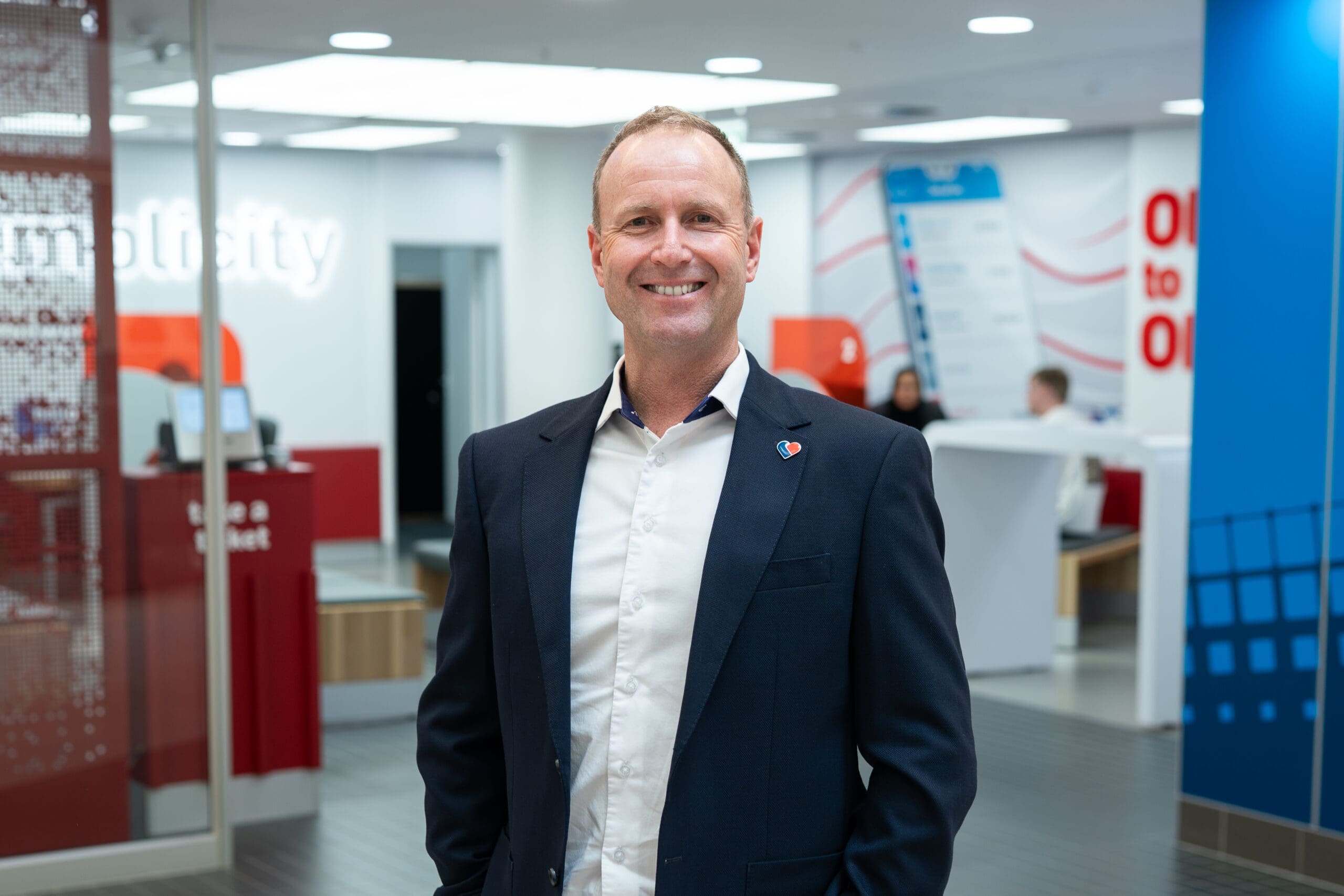
“Our purpose to make a meaningful difference and help South Africans grow remains the driving force behind every decision and every innovation,” says Graham Lee, Chief Executive Officer.
“What inspires me most is to see how that translates into tangible value for almost 5 million young people between 18 and 25 as well as for 686,000 business owners ranging from the small informal trader to some of SA’s leading commercial companies.
“We believe that if we continue to create value for our clients, they will in return continue to create value not only for our employees and our shareholders, but for South Africa at large.”
