
Close Menu
  • Homepage
  • News
  • Cloud & AI
  • ECommerce
  • Entertainment
  • Finance
  • Opinion
  • Podcast
  • Contact

Subscribe to Updates

Get the latest technology news from TechFinancials News about FinTech, Tech, Business, Telecoms and Connected Life.

What's Hot

SGL Golf Launches in U.S. Market to Meet Demand for Autonomous Course Management Solutions

2026-02-03

Private Credit Rating Agencies Shape Africa’s Access To Debt. Better Oversight Is Needed

2026-02-03

Xgram Launches Private USDT ERC20 to XMR Swaps

2026-02-03
Facebook X (Twitter) Instagram
Trending
  • SGL Golf Launches in U.S. Market to Meet Demand for Autonomous Course Management Solutions
Facebook X (Twitter) Instagram YouTube LinkedIn WhatsApp RSS
TechFinancials
  • Homepage
  • News
  • Cloud & AI
  • ECommerce
  • Entertainment
  • Finance
  • Opinion
  • Podcast
  • Contact
TechFinancials
Home»e-commerce»Deepfakes In South Africa: Protecting Your Image Online Is The Key To Fighting Them
e-commerce

Deepfakes In South Africa: Protecting Your Image Online Is The Key To Fighting Them

The ConversationBy The Conversation2024-03-06Updated:2024-04-04No Comments4 Mins Read
Share Facebook Twitter Pinterest LinkedIn Tumblr Email
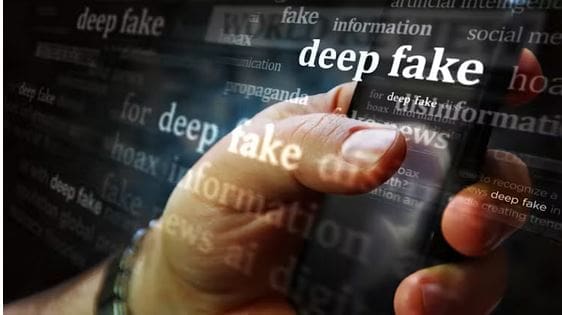
Deepfakes pose serious dangers. Arkadiusz Warguła/iStock
Share
Facebook Twitter LinkedIn Pinterest Email Copy Link

by Layckan Van Gensen, Stellenbosch University

Leanne Manas is a familiar face on South African televisions. Towards the end of 2023 the morning news presenter’s face showed up somewhere else: in bogus news stories and fake advertisements in which “she” appeared to promote various products or get-rich-quick schemes.

It quickly emerged that Manas had fallen victim to “deepfaking”. Deepfakes involve the use of artificial intelligence tools to manipulate images, video and audio. And it doesn’t require cutting-edge technical know-how. Software like FaceSwap and ZaoApp, which can be downloaded for free, mean that anybody can create deepfakes.

Deepfakes were initially used in the entertainment industry. For example, an actress in France who was unable to film her parts in person for a soap opera due to COVID restrictions still played the role thanks to deepfakes. In the health industry deep-learning algorithms, which are responsible for deepfakes, are used to detect tumours through pattern-matching in images.

But these positive applications are few and far between. There are rising global concerns about the effect deepfakes might have on democratic elections. Recent reports suggest that deepfakes are on the rise in South Africa and that South Africans seemingly struggle to spot them.

It is worrying, then, that South Africa’s government hasn’t yet taken any legislative steps to combat deepfakes – especially with the country’s national elections scheduled for later this year. I am a legal scholar specialising in sport law, with a particular focus on image rights. I’m especially interested in the recognition of an individual’s image right and the legal position when their likeness is misappropriated without their consent. That includes the use of deepfakes.

In my LLD thesis, I argued that a person’s image needs clear legal protection, taking into account the realities of digital media and the fact that many individuals such as influencers, athletes and celebrities generate an income from commodifying their image online. Promulgating legislation will create legal certainty in South Africa as it pertains to an individual’s image.

International examples

Various states in the US have already taken action to deal with deepfakes, mostly in the context of elections. For example, Texas become one of the first states to criminalise the use of deepfakes, especially if the content of the deepfake relates to political elections. It also recently passed a second bill which targets sexually explicit deepfakes. So it’s a criminal offence to create a deepfake video with the intention of injuring a political candidate or influencing an election result, or to distribute sexually explicit deepfakes without the consent of the individual, with the intention to embarrass them.

Maryland and Massachusetts, meanwhile, have proposed legislation that specifically prohibits the use of deepfakes. Maryland plans to target deepfakes that may influence politics; Massachusetts wants to criminalise the use of deepfakes for already “criminal or tortious (wrongful) conduct”.

In 2020 California became the first US state to criminalise the use of deepfakes in political campaign promotion and advertising. The AB 730 bill makes it a crime to publish audio, imagery or a video that gives a false and damaging impression of a politician’s words or actions. Though the bill doesn’t explicitly mention deepfakes it is clear that AI-manufactured fakes are its primary concern.

In 2023, the governor of New York signed the Senate Bill 1042A. This aims to prohibit the dissemination of deepfakes in general, not just in relation to elections.

At least four federal deepfakes bills have been considered. These include the Identifying Outputs of Generative Adversarial Networks Act and the Deepfakes Accountability Act.

Protecting image rights

There is currently no recognition of image rights in South Africa’s case law or legislation. Image rights are distinct from copyright in law. The scope of protection provided by copyright alone would not be enough to tackle the problem of deepfakes in a court setting.

I argue for legal intervention which recognises individual image rights. By recognising an image right the image will be protected against unauthorised use. This will not only include the misappropriation of an individual image for commercial use, it will also combat deepfakes, whether those relate to elections and politicians or any manipulation of a person’s image with malicious intent.

Image rights legislation is key. It can:

  • clearly define an individual’s image
  • specify when an infringement of the image has occurred
  • provide the image right holder with legal remedies for unauthorised use.

This can all help regulate deepfake situations. The malicious and deceptive nature of deepfakes may cause the image right holder to suffer significant harm. It is time that South Africa’s legislature addressed these situations by providing the necessary protection to individuals.The Conversation

Layckan Van Gensen, Junior Lecturer in Mercantile Law, Stellenbosch University

This article is republished from The Conversation under a Creative Commons license. Read the original article.

AI Deepfakes Deepfaking Faceswap Image rights Voice Deepfakes ZaoApp
Share. Facebook Twitter Pinterest LinkedIn Tumblr Email
The Conversation
  • Website

Related Posts

Private Credit Rating Agencies Shape Africa’s Access To Debt. Better Oversight Is Needed

2026-02-03

Why South Africa Cannot Afford To Wait For Healthcare Reform

2026-02-02

SA Auto Industry At Crossroads: Cheap Imports Threaten Future

2026-02-02

Stablecoins: The Quiet Revolution South Africa Can’t Ignore

2026-02-02

South Africa Could Unlock SME Growth By Exploiting AI’s Potential Through Corporate ESD Funds

2026-01-28

How Local Leaders Can Shift Their Trajectory In 2026

2026-01-23

Why Legal Businesses Must Lead Digital Transformation Rather Than Chase It

2026-01-23

Directing The Dual Workforce In The Age of AI Agents

2026-01-22

The Productivity Myth That’s Costing South Africa Talent

2026-01-21
Leave A Reply Cancel Reply

DON'T MISS
Breaking News

Dutch Entrepreneurial Development Bank FMO Invests R340M In Lula To Expand SME funding In SA

South African SME funding platform Lula has secured R340 million in local currency funding from…

Paarl Mall Gets R270M Mega Upgrade

2026-02-02

Huawei Says The Next Wave Of Infrastructure Investment Must Include People, Not Only Platforms

2026-01-21

South Africa: Best Starting Point In Years, With 3 Clear Priorities Ahead

2026-01-12
Stay In Touch
  • Facebook
  • Twitter
  • YouTube
  • LinkedIn
OUR PICKS

South Africa’s First Institutional Rand Stablecoin, ZARU, Launches

2026-02-03

What’s Stopping Sunny South Africa’s Solar Industry?

2026-02-02

The EX60 Cross Country: Built For The “Go Anywhere” Attitude

2026-01-23

Mettus Launches Splendi App To Help Young South Africans Manage Their Credit Health

2026-01-22

Subscribe to Updates

Get the latest tech news from TechFinancials about telecoms, fintech and connected life.

About Us

TechFinancials delivers in-depth analysis of tech, digital revolution, fintech, e-commerce, digital banking and breaking tech news.

Facebook X (Twitter) Instagram YouTube LinkedIn WhatsApp Reddit RSS
Our Picks

SGL Golf Launches in U.S. Market to Meet Demand for Autonomous Course Management Solutions

2026-02-03

Private Credit Rating Agencies Shape Africa’s Access To Debt. Better Oversight Is Needed

2026-02-03

Xgram Launches Private USDT ERC20 to XMR Swaps

2026-02-03
Recent Posts
  • SGL Golf Launches in U.S. Market to Meet Demand for Autonomous Course Management Solutions
  • Private Credit Rating Agencies Shape Africa’s Access To Debt. Better Oversight Is Needed
  • Xgram Launches Private USDT ERC20 to XMR Swaps
  • Bridging Financial Frontiers: ZOOMEX Launches “February XAUT Airdrop Event”
  • Why Haier, World’s #1 Appliance Maker, Is Targeting South Africa
TechFinancials
RSS Facebook X (Twitter) LinkedIn YouTube WhatsApp
  • Homepage
  • Newsletter
  • Contact
  • Advertise
  • Privacy Policy
  • About
© 2026 TechFinancials. Designed by TFS Media. TechFinancials brings you trusted, around-the-clock news on African tech, crypto, and finance. Our goal is to keep you informed in this fast-moving digital world. Now, the serious part (please read this): Trading is Risky: Buying and selling things like cryptocurrencies and CFDs is very risky. Because of leverage, you can lose your money much faster than you might expect. We Are Not Advisors: We are a news website. We do not provide investment, legal, or financial advice. Our content is for information and education only. Do Your Own Research: Never rely on a single source. Always conduct your own research before making any financial decision. A link to another company is not our stamp of approval. You Are Responsible: Your investments are your own. You could lose some or all of your money. Past performance does not predict future results. In short: We report the news. You make the decisions, and you take the risks. Please be careful.

Type above and press Enter to search. Press Esc to cancel.

Ad Blocker Enabled!
Ad Blocker Enabled!
Our website is made possible by displaying online advertisements to our visitors. Please support us by disabling your Ad Blocker.