

Close Menu
  • Homepage
  • News
  • Cloud & AI
  • ECommerce
  • Entertainment
  • Finance
  • Opinion
  • Podcast
  • Contact

Subscribe to Updates

Get the latest technology news from TechFinancials News about FinTech, Tech, Business, Telecoms and Connected Life.

What's Hot

Salesforce Appoints Nick Christodoulou As Area VP Of Sales For Africa

2026-02-02

Why South Africa Cannot Afford To Wait For Healthcare Reform

2026-02-02

How is Technology Used in Cricket?

2026-02-02
Facebook X (Twitter) Instagram
Trending
  • Salesforce Appoints Nick Christodoulou As Area VP Of Sales For Africa
Facebook X (Twitter) Instagram YouTube LinkedIn WhatsApp RSS
TechFinancials
  • Homepage
  • News
  • Cloud & AI
  • ECommerce
  • Entertainment
  • Finance
  • Opinion
  • Podcast
  • Contact
TechFinancials
Home»Breaking News»Roses Are Red, Violets Are Blue, Cybercriminals Are Ready To Come After You!
Breaking News

Roses Are Red, Violets Are Blue, Cybercriminals Are Ready To Come After You!

Staff WriterBy Staff Writer2021-02-11No Comments5 Mins Read
Share Facebook Twitter Pinterest LinkedIn Tumblr Email
cybercriminals
Valentine Day. Photo by alleksana from Pexels
Share
Facebook Twitter LinkedIn Pinterest Email Copy Link

The month of February is always when people think of new ways to celebrate their love for their partners. It is also when cybercriminals, as previously reported, think of new and creative ways to target and lure new victims with malicious activity. Especially during the current global restrictions enforced by the pandemic, which has driven significant increases in online shopping.

As people go online to purchase gifts for their loved ones during this period, Check Point Research (CPR) has observed a surge in malicious phishing email campaigns in the second half of January with over 400 malicious Valentine’s day themed individual phishing emails weekly.
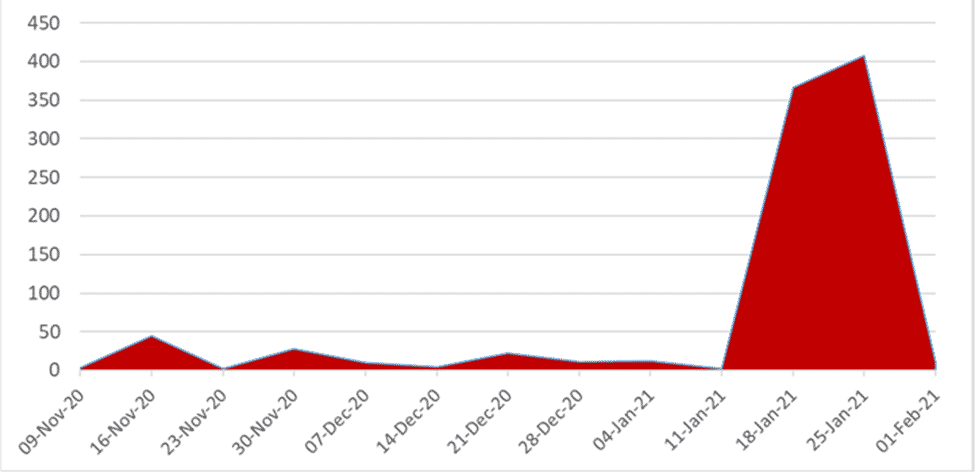
cybercriminals
Malicious Valentine’s Day Themed Phishing Emails by Week

A real-life phishing email example: a Pandora lookalike campaign

Most of the phishing scams are focused on buyer fraud, and in some cases have reused themes and webpages from past phishing campaigns. For example, we found an email pretending to be from Pandora that was similar to one that we saw being used in Black Friday related campaigns in November 2020.  The email’s aim was, as usual, to entice the user into purchasing jewelry items by offering them at unreasonably cheap prices, on a fake Pandora webpage which tries to imitate the look and feel of the real site.

In the following example, you will notice that in the fraudulent email the year has not changed (“2020 Pandora Official site” instead of 2021) and the company address is written in lower-case (“northern lakes lane, laurel, md, 20723”). These are signs that the email is from a dubious source, and the website is fake. Of course, the sender name has been changed to imitate the brand, but the email address is clearly not related to it. Anyone who clicks on the links in the email will be redirected to a fraudulent page (www[.]pcharms[.]com) which tries to imitate the “Pandora” website.


cybercriminals
Phishing website:
cybercriminals
web phishing

Why phishing attacks are so dangerous

Today’s phishing attacks can be extremely targeted. They are usually well planned, and backed by a huge amount of research. To ensure they are successful, attackers spend a lot of time studying their prey. Phishing attacks leverage different attack vectors, but the most common one is email. Other common attack vectors are phishing sites and text messages usually aimed at stealing credentials to perform account takeovers. These can lead to devastating results such as data loss, fraudulent money transfers and more. As mentioned, since these attacks are specifically designed to exploit the human nature of wanting a good deal, it is extremely important to prevent these attacks from ever reaching their desired victims – because even the most vigilant and cyber-savvy amongst us can sometimes get fooled.

Spike in Valentine’s Day themed domains

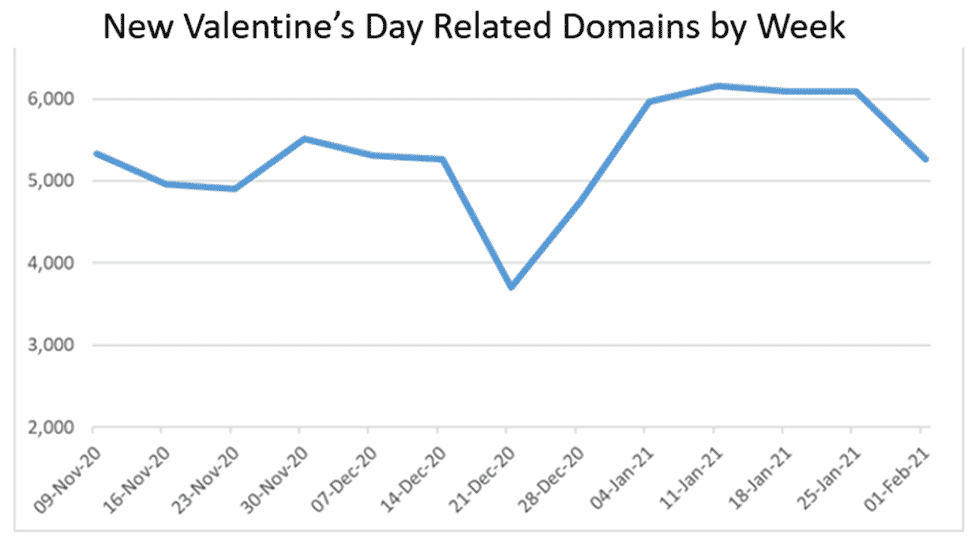
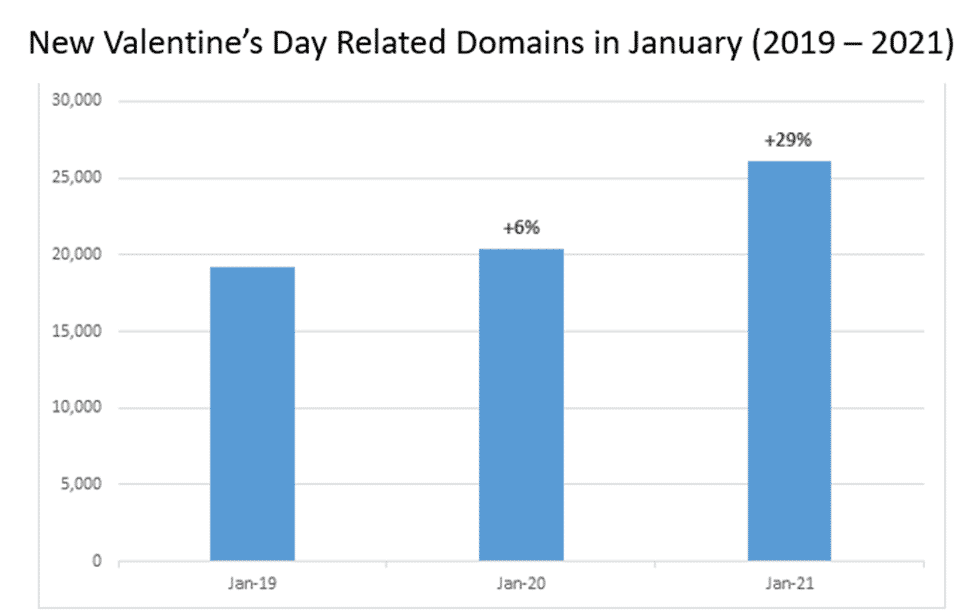
In addition, throughout January CPR has observed a spike in the number of new Valentine’s Day-themed domains registered. Out of the 23,000 new domains, 0.5% (115) were found to be malicious, and 1.8% (414) found to be suspicious. In general, there was a 29% increase in such domains registered in January, in time for the Valentine’s Day season.
How do you avoid falling victim to these fraud attempts? Here is what we recommend for a safer online experience:

  1. Verify you are ordering online from an authentic source. One way to do this is NOT to click on promotional links in emails, and instead Google your desired retailer and click the link from the Google results page.
  2. Never share your credentials. Credential theft is a common goal of cyberattacks. Many people reuse the same usernames and passwords across many different accounts, so stealing the credentials for a single account is likely to give an attacker access to a number of the user’s online accounts. Never share your account credentials and don’t re-use passwords.
  3. Always be suspicious of password reset emails. If you receive an unsolicited password reset email, always visit the website directly (don’t click on embedded links) and change your password to something different on that site (and any other sites with the same password). By clicking on a link, you can reset the password to that account to something new. Not knowing your password is, of course, also the problem that cybercriminals face when trying to gain access to your online accounts. By sending a fake password reset email that directs you to a lookalike phishing site, they can convince you to type in your account credentials and send those to them.
  4. Always note the language in the email. Social engineering techniques are designed to take advantage of human nature. This includes the fact that people are more likely to make mistakes when they’re in a hurry and are inclined to follow the orders of people in positions of authority. Phishing attacks commonly use these techniques to convince their targets to ignore their potential suspicions about an email and click on a link or open an attachment.
  5. Beware of “special” offers. An 80% discount on a new iPhone or an item of jewelry is usually not a reliable or trustworthy purchase opportunity.
  6. Beware of lookalike domains, spelling errors in emails or websites, and unfamiliar email senders.

Check Point Cybercriminals online shopping phishing attacks Valentine Day
Share. Facebook Twitter Pinterest LinkedIn Tumblr Email
Staff Writer

Related Posts

SA Auto Industry At Crossroads: Cheap Imports Threaten Future

2026-02-02

Paarl Mall Gets R270M Mega Upgrad

2026-02-02

Huawei Says The Next Wave Of Infrastructure Investment Must Include People, Not Only Platforms

2026-01-21

South Africa: Best Starting Point In Years, With 3 Clear Priorities Ahead

2026-01-12

How SA’s Largest Wholesale Network is Paving the Way for a Connected, Agile Future

2025-12-02

Oni-Tel Launches Inter-Data Centre Fibre Network With Digital Parks Africa As First Point Of Presence

2025-11-27

Vodacom Announces Multi-Year Strategic Collaboration With Google Cloud to Boost Africa’s AI Advancement

2025-11-25

Telkom Consumer Fuels Growth With Prepaid, Data Strategy

2025-11-18

Digital Public Infrastructure: The Need for Leadership And Sovereignty In South Africa’s Digital Future

2025-11-03
Leave A Reply Cancel Reply

DON'T MISS
Breaking News

SA Auto Industry At Crossroads: Cheap Imports Threaten Future

Government must urgently finalise new energy vehicles policy, refine tariffs and deploy anti-dumping measures to…

Paarl Mall Gets R270M Mega Upgrad

2026-02-02

Huawei Says The Next Wave Of Infrastructure Investment Must Include People, Not Only Platforms

2026-01-21

South Africa: Best Starting Point In Years, With 3 Clear Priorities Ahead

2026-01-12
Stay In Touch
  • Facebook
  • Twitter
  • YouTube
  • LinkedIn
OUR PICKS

What’s Stopping Sunny South Africa’s Solar Industry?

2026-02-02

How a Major Hotel Group Is Electrifying South Africa’s Travel

2026-01-29

The EX60 Cross Country: Built For The “Go Anywhere” Attitude

2026-01-23

Mettus Launches Splendi App To Help Young South Africans Manage Their Credit Health

2026-01-22

Subscribe to Updates

Get the latest tech news from TechFinancials about telecoms, fintech and connected life.

About Us

TechFinancials delivers in-depth analysis of tech, digital revolution, fintech, e-commerce, digital banking and breaking tech news.

Facebook X (Twitter) Instagram YouTube LinkedIn WhatsApp Reddit RSS
Our Picks

Salesforce Appoints Nick Christodoulou As Area VP Of Sales For Africa

2026-02-02

Why South Africa Cannot Afford To Wait For Healthcare Reform

2026-02-02

How is Technology Used in Cricket?

2026-02-02
Recent Posts
  • Salesforce Appoints Nick Christodoulou As Area VP Of Sales For Africa
  • Why South Africa Cannot Afford To Wait For Healthcare Reform
  • How is Technology Used in Cricket?
  • SA Auto Industry At Crossroads: Cheap Imports Threaten Future
  • Stablecoins: The Quiet Revolution South Africa Can’t Ignore
TechFinancials
RSS Facebook X (Twitter) LinkedIn YouTube WhatsApp
  • Homepage
  • Newsletter
  • Contact
  • Advertise
  • Privacy Policy
  • About
© 2026 TechFinancials. Designed by TFS Media. TechFinancials brings you trusted, around-the-clock news on African tech, crypto, and finance. Our goal is to keep you informed in this fast-moving digital world. Now, the serious part (please read this): Trading is Risky: Buying and selling things like cryptocurrencies and CFDs is very risky. Because of leverage, you can lose your money much faster than you might expect. We Are Not Advisors: We are a news website. We do not provide investment, legal, or financial advice. Our content is for information and education only. Do Your Own Research: Never rely on a single source. Always conduct your own research before making any financial decision. A link to another company is not our stamp of approval. You Are Responsible: Your investments are your own. You could lose some or all of your money. Past performance does not predict future results. In short: We report the news. You make the decisions, and you take the risks. Please be careful.

Type above and press Enter to search. Press Esc to cancel.

Ad Blocker Enabled!
Ad Blocker Enabled!
Our website is made possible by displaying online advertisements to our visitors. Please support us by disabling your Ad Blocker.